News
Penn State Researchers Say Data Centers Could Pair with Indoor Farms to Grow Food More Efficiently
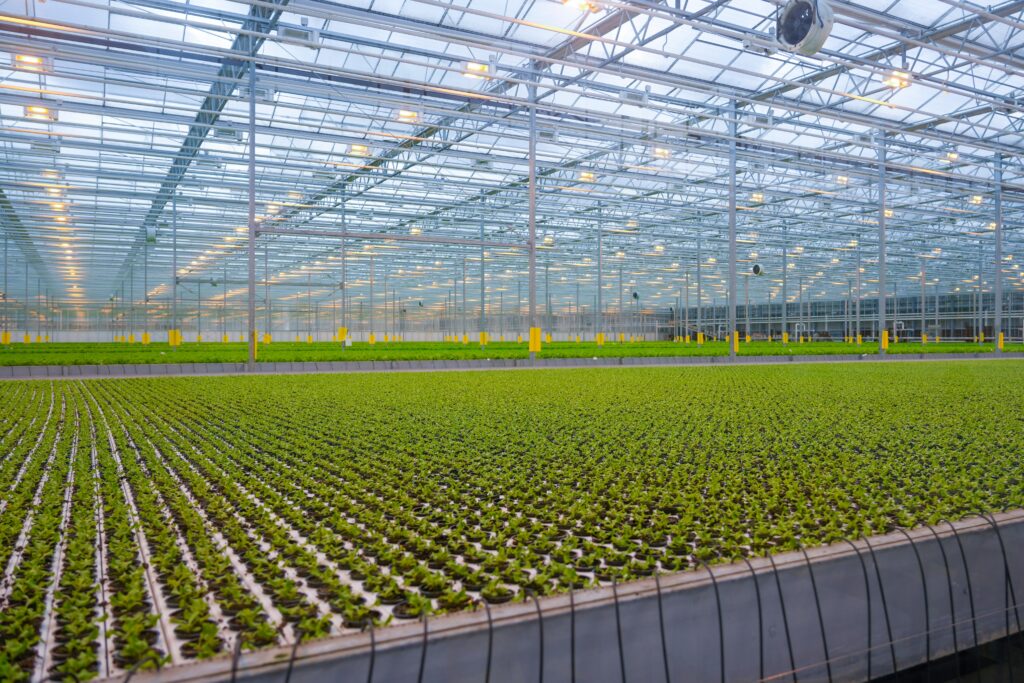
Waste heat from data centers could warm large commercial greenhouses as part of a new energy model proposed by researchers at Penn State.
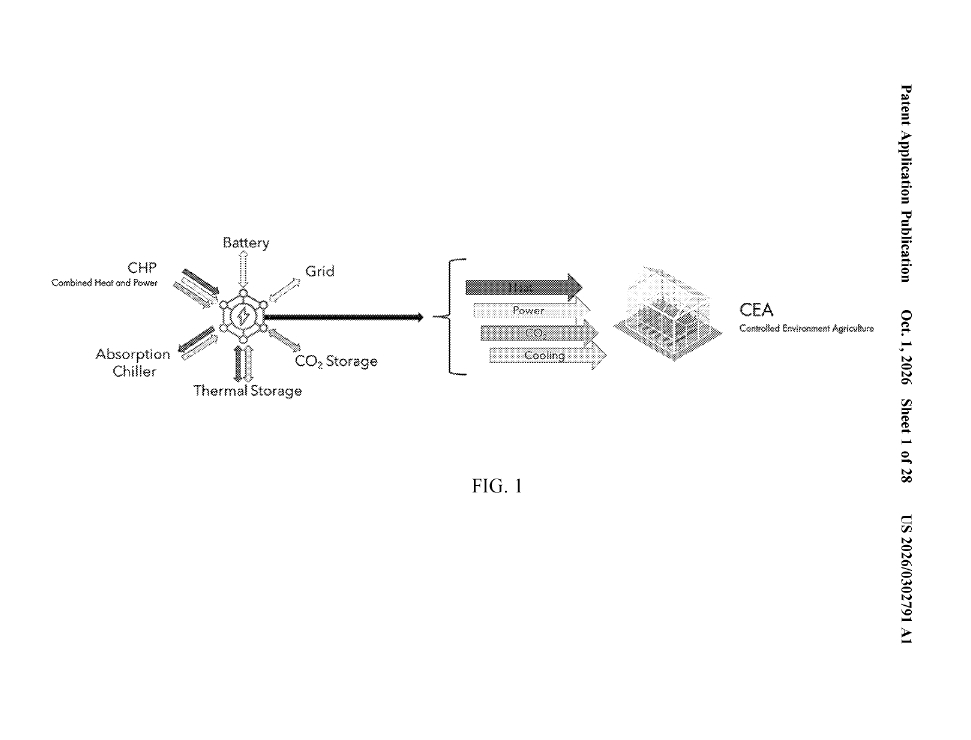
The model, described in a patent application published Oct. 1 and filed by a trio of researchers at Penn State’s main campus, would tie a greenhouse and a data center to an on-site natural gas generator, with the data center’s waste heat used to warm the greenhouse.
“…In certain embodiments, waste heat from sources such as data centers can be recovered and supplied to the CEA (controlled environment agriculture), thus further improving overall utilization and efficiency,” the patent application states.
“This interacting three component system—CHP (combined heat and power), data center, and CEA—can relieve pressure on the central electric grid system struggling to meet data center growth electrical demand, while creating local area economic benefits via goods production and employment, which benefits stand-alone data centers do not address,” it said.
The inventors are Jacob Seiler, Gregory S. Pavlak and James Freihaut of Penn State. The application was filed March 27, and the Penn State Research Foundation is listed as the applicant.
Heat and energy use remain among criticisms of data centers as they are proposed in communities across the U.S. Residents and public officials have opposed data centers that require grid upgrades and raise electric rates for everyone. Many communities are also concerned about residual impacts of data centers, including heat generation, that could impact quality of life.
Indoor farms, which the industry calls controlled environment agriculture, can match the crop yields of traditional farms while using far less water, land and chemicals, according to the Penn State patent application. Hydroponic greenhouses produce the same yields on about 10 percent of the land and water used in conventional farming and can grow food year-round close to city markets, the application states. It cites UN Food and Agriculture Organization estimates that agriculture accounts for 70 percent of the world’s freshwater use.
It’s not a small opportunity.
U.S. growers sold $1.01 billion worth of food crops grown in greenhouses and other protected environments in 2024, up 44 percent from 2019, according to the U.S. Department of Agriculture’s latest Census of Horticultural Specialties, released in February.
The number of these indoor farming operations more than doubled between 2009 and 2019, to nearly 3,000, according to a January 2024 report by the USDA’s Economic Research Service. Production rose 56 percent over that decade, from 502 million pounds to 786 million pounds. Sales, adjusted for inflation, rose to $769 million in 2014 and fell to $626 million in 2019. More than 60 percent of the tomatoes, cucumbers, and lettuce grown indoors in 2019 were grown hydroponically, in water rather than soil.
Tomatoes account for about half of indoor food crop production by weight, according to a 2024 USDA report cited in the Penn State patent application. The application also cites the USDA’s 2022 Census of Agriculture, which counted 8,578 farms growing tomatoes under protection on 1,570 acres.
The tradeoff is energy. Indoor farms need electricity for lights, fans, and pumps, heating and cooling to maintain growing conditions, and added carbon dioxide, often two to three times outdoor levels, to support plant growth. Energy, labor, management, and infrastructure account for more than 80 percent of greenhouse farm costs, according to the application.
The Penn State inventors propose pairing the greenhouse with an on-site natural gas generator that produces electricity and heat at the same time, with its exhaust carbon dioxide cleaned and fed to the plants. Heat storage, batteries, and software that decides hour by hour what to run, store, buy, or sell round out the system.
A data center can be added as a third piece, drawing power and cooling from the system and sending its waste heat to the greenhouse.
In a simulation of a 25-acre tomato greenhouse in State College, Pa., without a data center, the generator and heat storage saved $580,451 a year in energy costs compared with a greenhouse running on a conventional boiler and grid power.
Leave a Reply