News
Tennessee Nuclear Plant May Need NRC Emergency Approval to Refuel if Degraded Equipment Can’t Be Replaced, TVA Says
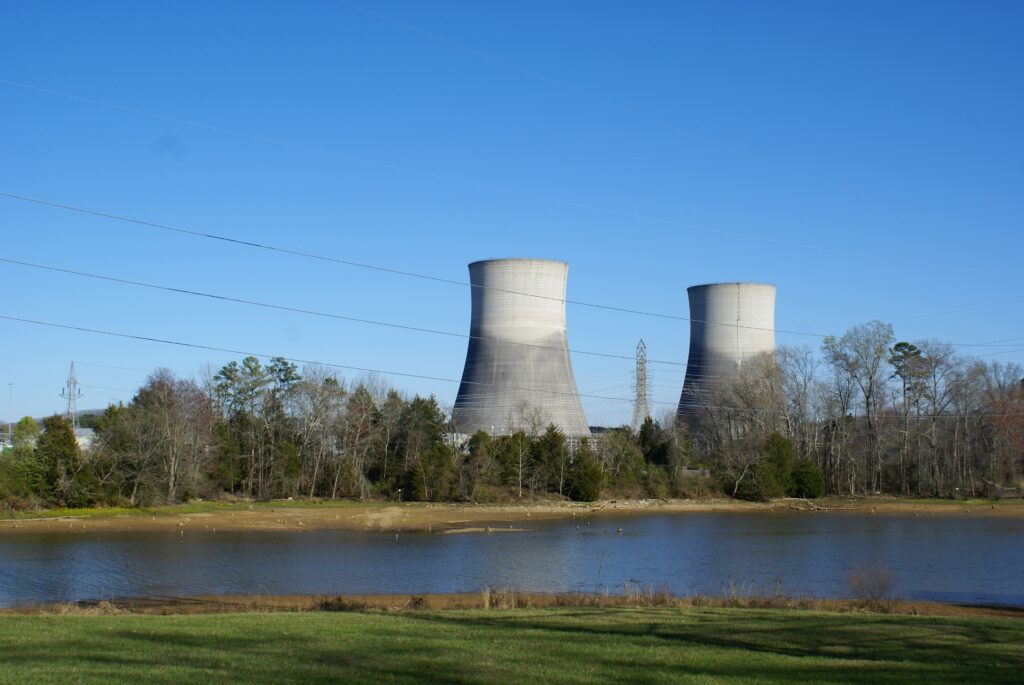
The Tennessee Valley Authority may need emergency Nuclear Regulatory Commission approval to refuel and restart Sequoyah Unit 2 if a degraded neutron detector can’t be replaced, according to a TVA presentation the NRC published Tuesday.
In the presentation, dated Sept. 28 and prepared for a meeting with the NRC, TVA described the detector as “currently operable but in a degraded condition.” Operable is the NRC’s term for equipment that is still capable of performing its required function. TVA said no NRC action is required now and laid out the license changes it would seek if the replacement fails.
According to the presentation, the refueling outage begins Oct. 2. Removal of fuel from the reactor is tentatively set to start Oct. 7, and reloading of fuel on Oct. 18.
The owner
TVA says it is the nation’s largest provider of public power, owned by the federal government, serving more than 10 million people across seven states. Sequoyah sits on 525 acres beside Chickamauga Reservoir near Soddy-Daisy, Tenn., in Hamilton County. Each of its two units is a Westinghouse pressurized water reactor, in which the NRC says water is kept under high pressure so it does not boil. TVA says each unit produces more than 1,160 megawatts.
What is failing
According to TVA, Sequoyah uses two detector assemblies per unit—equipment that measures neutron levels in the reactor core when the reactor is shut down, being refueled or starting up. Those levels show how active the nuclear chain reaction is. They are mounted outside the reactor core.
TVA said each assembly contains two identical detectors, called fission chambers, in one canister. One feeds what is known as the source range, which the NRC describes as monitoring the neutron level “during a reactor shutdown and the initial phase of start-up.” The other feeds both the source range and the intermediate range, which picks up as the reactor comes up toward power.
TVA said one of the two chambers in Unit 2’s second assembly is “showing early signs of degradation at a location internal to the detector,” which it attributed to a degraded cable inside the assembly. TVA said the fault intermittently degrades the quality of the signal from that source range channel.
TVA said it disconnected the damaged chamber, and the assembly now supplies both readings from its one remaining chamber.
Why a replacement is hard to find
According to the presentation, the detector and its metal cable are built as one piece. The cable runs 171 feet from the detector’s position beside the reactor to a junction box inside containment. TVA said the manufacturer told it this is the longest such cable in the industry, so other plants’ spares will not fit, and shorter cables cannot be spliced.
TVA said a new assembly is on order but will not arrive before the outage ends.
That leaves a spare TVA acquired in 1989. TVA said testing this year indicates it is usable. Installing it carries its own risk. According to TVA, if the cable is bent too sharply and kinks, the entire assembly becomes inoperable, knocking out both its source range and intermediate range readings. The swap cannot begin until all fuel is removed from the reactor, TVA said.
What happens if it fails
In the first of two scenarios TVA outlined, the replacement fails or the assembly fails during refueling. Sequoyah’s Technical Specifications, the part of its NRC license that sets minimum equipment and safety requirements, require two working source range monitors during refueling. With one out of service, all movement of fuel and other components in the reactor vessel must stop immediately. TVA said it would need NRC approval for a temporary change allowing fuel loading to continue with one monitor during this outage only.
In the second, TVA said, it could not restart Unit 2 for the operating period that follows this outage. It would need NRC approval to change several sections of its Technical Specifications so the unit could run through that entire period, and unload fuel at the next outage, with one source range and one intermediate range channel out of service. The draft language TVA presented would suspend a current requirement that, with one source range channel out of service, the channel be repaired within 48 hours or all control rods, which absorb neutrons to control the reactor’s power, be inserted.
TVA said it would “most likely pursue enforcement discretion (including an emergency license amendment request).” Enforcement discretion is an NRC decision not to enforce a license requirement temporarily. An emergency license amendment is an expedited change to the license.
Is it a safety issue
According to TVA, these instruments sound alarms, block control rod withdrawal and automatically shut down the reactor when neutron levels rise sharply at low power. They are provided, TVA said, to guard against two events: control rods being pulled out while the reactor is shut down, and boron dilution.
Pressurized water reactors keep boron, which absorbs neutrons, dissolved in the cooling water to hold down the chain reaction. The NRC describes boron dilution as a drop in boron concentration caused by the accidental addition of water without boron, which “adds reactivity to the system and is therefore of regulatory concern.”
TVA said only its boron dilution analyses count on these instruments. It said the refueling change would not affect its safety analyses, because boron dilution during refueling and fuel being placed in the wrong location are ruled out by other controls.
For a full operating period with one channel out, TVA said the change “would result in a loss of redundancy,” meaning no backup channel, for detecting boron dilution and for monitoring the plant after an accident.
In the presentation, TVA proposed an extra precaution, testing the cooling water’s boron concentration every four hours, and cited an existing requirement that valves on sources of water without boron be locked closed during refueling.
The safety conclusions are TVA’s. The NRC has not issued an evaluation.
Precedent
Among three precedents TVA cited, on Aug. 17, 2025, the NRC issued an emergency license amendment for Vistra’s Davis-Besse plant in Ohio after a source range channel failed during an unplanned shutdown, allowing substitute neutron monitoring until March 2026.
The plant’s history
The Atomic Energy Commission, the NRC’s predecessor, issued construction permits for both Sequoyah units on May 27, 1970. Unit 1 entered commercial operation in July 1981 and Unit 2 in June 1982.
Sequoyah was shut down in 1985. That September, the NRC sent TVA a formal demand for information about its nuclear program. In a July 1987 letter, the NRC said TVA’s response laid out plans for “correcting problems in the overall management of its nuclear program,” and said that before Sequoyah restarted, TVA would be expected to show its program for handling employee safety concerns was working and that “an environment of intimidation and harassment does not exist.” On March 30, 1988, the commission unanimously authorized NRC staff to permit TVA to restart Unit 2 once remaining conditions were met.
In September 2015, the NRC renewed both licenses for 20 years. Unit 1 is licensed through Sept. 17, 2040, and Unit 2 through Sept. 15, 2041.
Leave a Reply