Data Centers
In one New Jersey Suburb, It’s Back to the Drawing Board on a Data Center Ban
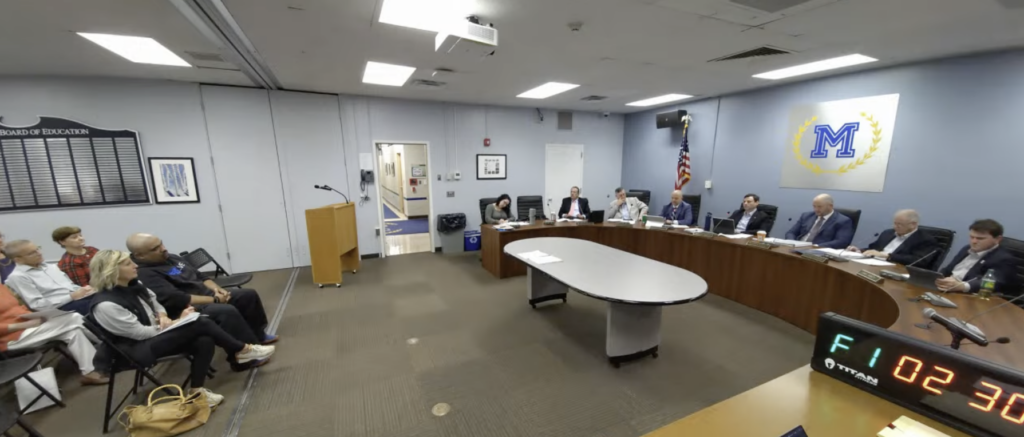
Millburn, New Jersey, considered but withdrew a proposed ban on data centers Tuesday after its Planning Board found the measure at odds with the township’s master plan. The Essex County suburb still intends to prohibit large facilities, but the committee must introduce and adopt a revised ordinance before any new ban takes effect.
Millburn’s issue illustrates the complexities some local governments in the U.S. face when working out legislative responses to data centers: doing it correctly means ensuring no loopholes or conflicts can lead to the losing end of a legal challenge.
The Township Committee had planned to hold a public hearing and final vote on the data-center ban Oct. 6, but instead, it withdrew the proposal.
The ordinance, introduced Sept. 1, would have prohibited data centers in every zoning district while carving out limited exceptions for computer equipment used by local businesses and residents. Committeeman Michael Cohen, who sits on the Planning Board, said the board voted 5-4 to find the ordinance inconsistent with the master plan. Cohen said he considered it consistent.
“So, at the end of the day, we’re going to have an ordinance that bans data centers. We just have to wait a little bit longer,” Mayor Frank Saccomandi told the committee.
The resolution states that the committee “is still committed to banning Data Centers within the Township.” The township’s Environmental Commission recommended a ban for now and further study before deciding whether any data-center use should be allowed later.
A Planning Board subcommittee worked on changes after the board’s vote, Saccomandi said. The committee expects to introduce the revised measure on first reading at its next meeting, Oct. 20.
Lawrence Berkeley National Laboratory’s “United States Data Center Energy Usage Report: 2025 Update,” published in June 2026, estimated that data centers could use 11.8 percent of U.S. electricity by 2030, with scenarios ranging from 9.5 percent to 15 percent. The growth reflects the expanding use of artificial intelligence and cloud services, and it is sending developers to utilities and local planning offices for power, land and approvals.
Across more than 30 states, nearly 100 communities have proposed or enacted measures to pause data-center development while they study power, water, noise and land-use impacts. Woodbury, Minnesota, adopted a pause of up to one year in September to study water use, electricity demand, noise and zoning. Greensboro, North Carolina, adopted a 180-day moratorium in August on data centers drawing more than 10 megawatts.
Randolph County, North Carolina, wrote standards instead, amending its data-center rules to require closed-loop cooling systems and noise impact studies. Millburn’s approach would go further than a temporary pause by barring the defined use throughout the township if adopted.
Millburn had an estimated 22,874 residents in 2025, according to the U.S. Census Bureau. Median household income for 2020-2024 was $250,000 or more, the top of the Census Bureau’s reporting range, and the median owner-occupied home value was $1,371,500. About 81 percent of occupied housing units were owner-occupied.
The original ordinance defined a data center broadly enough to cover server farms, commercial colocation, cloud computing, cryptocurrency mining, and AI computing. It also said an operator could not evade the ban by splitting one operation among buildings, tenants or meters. The proposed business exception covered equipment serving a permitted main use, subject to limits including 20 percent of a building’s floor area or 10,000 square feet, whichever was less, and 2 megawatts of dedicated computing capacity.
A residential exception allowed home computing equipment up to 50 kilowatts, including cryptocurrency mining and AI computing for outside customers, if the activity qualified as a home occupation or accessory residential use.
Those exceptions became the focus of the Planning Board’s concern, according to Saccomandi. At the end of Tuesday’s meeting, he said the rewrite would remove specific restrictions on uses by businesses with their own on-site computing. It would lower the business power threshold from 2 megawatts to 1 megawatt and the residential threshold from 50 kilowatts to 25 kilowatts. Saccomandi said he made the business cut “because I felt that was more appropriate.”
“We’re going to be banning large-scale data centers, but we’re going to allow small businesses to have appropriately sized on-prem compute,” Saccomandi said. He also pointed to residents who keep servers at home for security and other systems.
The old proposal cited heavy electricity demand, utility equipment, cooling, backup generators, noise and water use among its reasons for a ban. It found that data centers would not fit the township’s land-use goals, which emphasize residential neighborhoods, established business districts and a walkable downtown.
The measure was written as a townshipwide land-use rule. Neither the meeting materials nor the committee’s discussion cited a specific application. The ordinance cited Gov. Mikie Sherrill’s May 27 data-center plan. Since then, New Jersey has enacted requirements for large data centers to pay for associated grid infrastructure and for operators to report energy and water use.
The committee’s next scheduled meeting is Oct. 20 at 7 p.m. at the Millburn Education Center, 434 Millburn Avenue. If the revised ban is introduced then, it will still need the required review, notice, public hearing, and final committee vote before it can become law.
Leave a Reply