Data Centers
Minnesota city pauses data center expansion for a year to study power, water and zoning
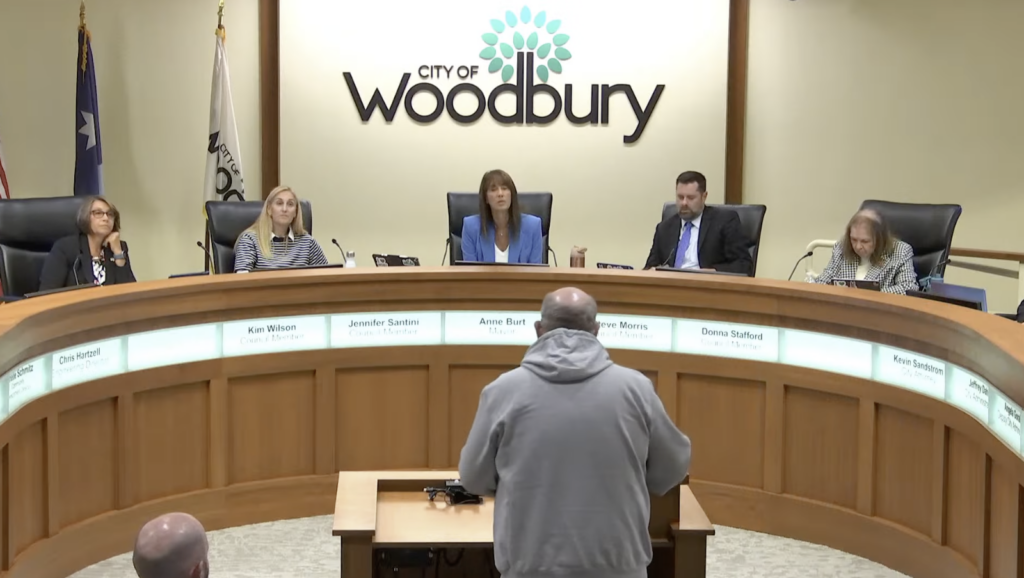
Minnesota’s Woodbury City Council voted Wednesday unanimously to take a breath for a year on data centers, so it can more thoroughly examine potential impacts to the community.
The vote followed nearly 70 minutes of public testimony and council debate. The action also covers proposed uses that would rank among the city’s largest users of municipal water or sanitary sewer service. It authorizes a study of local impacts and potential zoning changes.
The pause ends after a year, or sooner if the city adopts regulations that expressly address the covered uses.
“This action is being done proactively and is not in response to a specific project,” city planner Eric Searles told the council. He said Woodbury has no active conversations or applications involving a data center developer or end user. Staff sought the pause while no proposal was pending, rather than trying to change the rules during a project review.
Woodbury, in Washington County east of St. Paul, has slightly more than 80,000 residents, according to the U.S. Census Bureau. About 25 percent of residents are under 18, and 13.7 percent are 65 or older. The bureau estimated a median household income of $125,310, a 78 percent owner-occupied housing rate, and a 5.3 percent poverty rate.
Woodbury already has three data centers along a stretch of Bielenberg Drive in the municipality. Searles said the oldest location, at 500 Bielenberg, dates to the late 1970s; a Medtronic facility at 515 Bielenberg dates to the mid-1980s; and a facility at 401 Bielenberg began operating around 2012 or 2013. He said none uses city water to cool servers. The 500 Bielenberg site expanded internal operations in 2025.
Existing operations at those locations may continue under the action. The ordinance blocks new applications and city permits for construction or expansion during the study. At the council’s request, staff broadened a draft provision that mentioned building permits to cover “other city permits” as well. That language could reach electrical, right-of-way, or land-disturbance work needed for an expansion.
Residents focused much of their testimony on IronGate’s plans to increase capacity at its local facilities. Several described a potential increase from less than 20 megawatts combined to more than 100 megawatts. Those figures came from speakers, not a capacity schedule presented by city staff. Searles said the existing electrical systems at the facility under discussion were designed for less than 20 megawatts, but he did not have an exact number at the meeting. He said greater capacity would require additional permitted work.
Woodbury Mayor Anne Burt repeatedly said the moratorium would stop the contemplated expansion while the city studies its effects. City Attorney Sandstrom said the ordinance cannot reach backward to undo approvals already granted. Council members also examined a narrower case: whether a facility could use capacity already allowed under an existing permit. The discussion did not establish a new limit on operations within that approved capacity.
Water was another source of concern, particularly as Woodbury builds permanent treatment for wells affected by PFAS. Searles presented 2025 municipal water use for the three existing data centers, ranging from about 94,000 gallons to more than 5.7 million gallons a year. He cautioned that the comparison was context, not a list of the city’s largest users, and reiterated that the centers do not use municipal water for server cooling. Council members asked how future cooling systems, discharge and other large users should be assessed.
Susan Asplin, a longtime resident, urged the city during a public comment period to examine electricity, cooling, noise, backup generation and who pays for infrastructure. “We need real answers” about the centers already operating nearby, she said. Peggy King, another resident, said she had not understood the scale of recent work at the former Hartford property and wanted more public notice.
The hearing also exposed disagreement over what local government can measure and control. Councilmember Wilson pressed staff on whether an operator could increase electricity use inside an existing building without seeking another permit. S
taff said major electrical expansion would require city approvals, while council members acknowledged that using spare capacity within an existing approval posed a different question. The council adopted the broader permit wording before the roll-call vote.
Councilmember Morris argued that the city should study heavy infrastructure demand across uses, instead of writing a rule limited to data centers. The ordinance defines another covered user by whether a proposed use would place it among Woodbury’s top annual municipal water or sewer consumers. It sets no numerical threshold in the posted draft.
Searles said the study would consider the water system’s capacity and standards for future applicants. He put citywide pumping at about 2.7 billion gallons annually.
The planning commission and city staff will study localized effects and how other communities regulate these facilities, then recommend whether and how Woodbury should amend its zoning ordinance. Searles said a formal schedule had not been set. He expected initial findings around early 2027, with commission review, council checkpoints and public comment before any permanent code changes return for a hearing.
The ordinance is a pause on new approvals, not a decision to permanently prohibit data centers in Woodbury. Its immediate effect, however, is concrete: a company seeking to expand beyond work already permitted must wait while the city decides what demands its infrastructure can support and what conditions should govern the next project.
Leave a Reply