Finance
The Loop: How Federal Nuclear Money Flows Through One Company Into the Data Center Buildout
When Vistra Corp. reported second-quarter results on Aug. 7, 2026, the headline numbers were strong: adjusted EBITDA of $1.767 billion, up more than 30 percent year over year, and a reaffirmed full-year range of $6.8 billion to $7.6 billion.
But the more important disclosure was not the quarter.
It was the structure taking shape behind it.
The capital-allocation discussion and the company’s Form 10-Q trace a closed loop: money moves from the U.S. Treasury through Vistra’s nuclear fleet into a $10 billion AI-infrastructure fund, then back to data centers that will buy Vistra’s electricity. The company stands on both sides of the transaction.
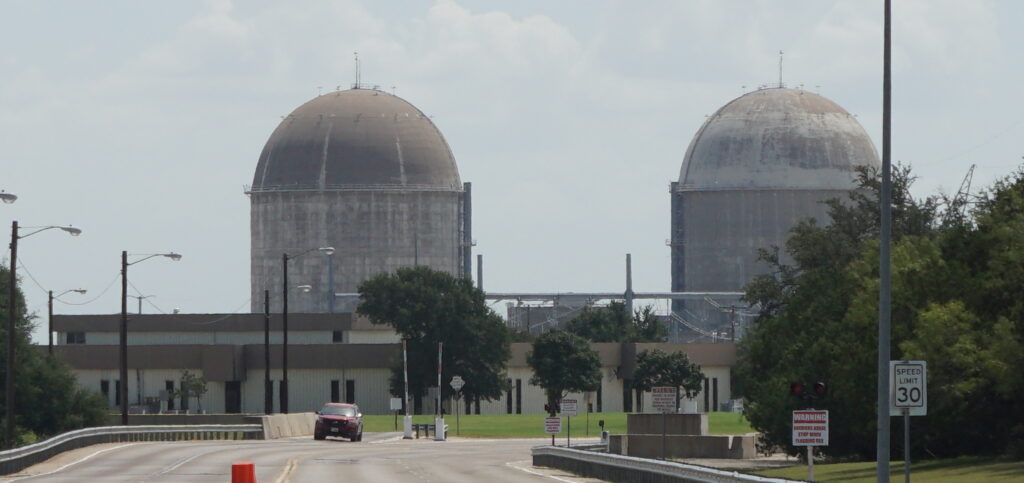
The chain begins with the Section 45U zero-emission nuclear production tax credit. Vistra collects it across Comanche Peak in Texas and the Beaver Valley, Perry and Davis-Besse plants in the PJM market.
Created by Section 13105 of the Inflation Reduction Act, the credit pays up to $15 per megawatt-hour for electricity from existing nuclear plants. The 117th Congress passed the law, and President Biden signed it on Aug. 16, 2022. The program runs from 2024 through 2032.
For Vistra, the money is already material. The company recognized $545 million of transferable 45U revenue in 2024 and $220 million in 2025, booking both amounts directly into operating revenue. On the August call, CFO Kristopher Moldovan pointed to “the downside protection afforded by the nuclear PTC” when explaining why Vistra held its 2027 EBITDA midpoint range despite softer ERCOT forward curves.
The provenance matters because Section 45U came from a Biden-era statute and remains in force. The Trump administration actions cited in Vistra’s filing — including the January 2025 “Unleashing American Energy” order and later moves against EPA greenhouse-gas rules — neither created nor changed it. Everything that follows rests on cash flow Congress deliberately added.
That support does more than lift nuclear revenue. By stabilizing earnings from a baseload fleet, it also improves the economics of assets data center hyperscalers are now competing to contract.
Vistra has already turned those assets into long-term demand. It signed a 20-year power purchase agreement with Amazon Web Services for 1,200 MW from Comanche Peak, followed by a 20-year agreement announced in January 2026 to supply Meta with 2,609 MW across the PJM sites. Federal support helps keep the plants operating; the contracts convert that capacity into AI power sales.
Now the capital turns. In June 2026, Vistra committed up to $1 billion as a founding investor in the Helix Fund, formally KKR Helix C L.P. The fund backs Helix Digital Infrastructure, a new AI-infrastructure company launched with more than $10 billion in committed capital and led by former AWS chief Adam Selipsky.
KKR and the Kuwait Investment Authority are the other anchor investors, while Vistra’s filing describes NVIDIA as a “cornerstone strategic partner.” Vistra’s commitment consists of $500 million upfront and another $500 million tied to commercial power-supply milestones on its generation assets, although the company can elect to fund that amount regardless.
CEO James Burke called Helix a “rack-to-grid one-stop shop” that combines power solutions, land and digital infrastructure for data centers.
Its mandate, according to Vistra’s SEC filing, is to “invest in and manage assets critical to enabling artificial intelligence.” That includes hyperscale data centers, baseload and flexible generation, transmission and distribution, and fiber. The fund will finance the physical assets AI companies need; Vistra contributes both capital and access to power.
The final leg closes the structure. Burke described Vistra’s role as “twofold”: founding investor and “preferred power partner.”
The plan, ostensibly: Vistra helps finance what Helix builds, then sells electricity to it through new generation projects or new contracts on existing assets. The data centers create the load; Vistra’s nuclear and gas fleet supplies it.
Vistra’s filings and the Q2 call do not disclose any agreement for Helix-financed data centers to buy power from Vistra, and none is implied by the founding-investor structure. The closing of the loop is an inference from the broader market pattern — the AWS and Meta agreements show hyperscalers signing 20-year deals for firm, around-the-clock power that nuclear can supply without direct carbon emissions — not from a transaction in these documents.
Read end to end: a 2022 federal statute strengthens Vistra’s nuclear earnings; Vistra puts part of that capital into Helix; Helix combines it with money from KKR, NVIDIA and a sovereign wealth fund to build AI infrastructure; and Vistra sells power into the demand it helped finance.
Burke told investors that Vistra expects ERCOT load to grow 4 percent to 6 percent and PJM load 2 percent to 3 percent through 2030, with data centers contributing “particularly in 2028 and beyond.”