Nuclear
Control Rods Accidentally Fell into Core of Florida Nuke Plant During August Mishap, NRC told
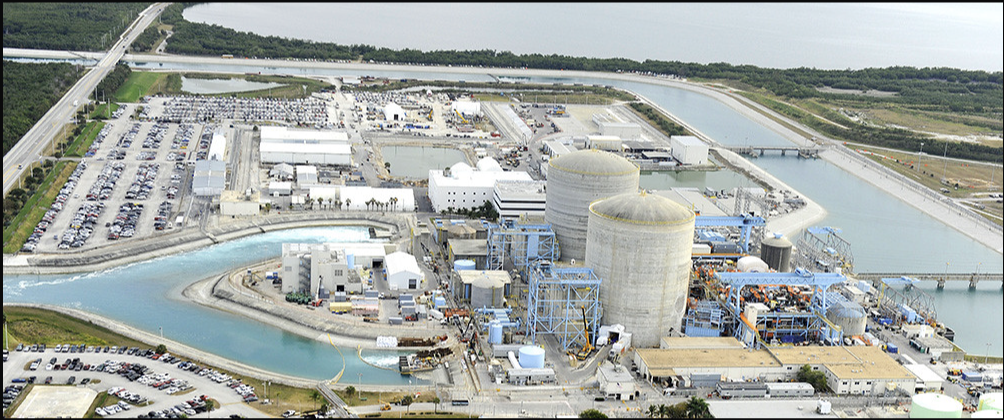
A sudden shutdown of a Florida nuclear power plant over the summer happened when three control rods accidentally dropped into the reactor’s core, a failure that led operators to manually shut it down.
Details of the Aug. 13 incident at the St. Lucie 1 nuclear plant, operated by Florida Power & Light, emerged in letters posted online yesterday by the Nuclear Regulatory Commission.
The findings showed that an electrical misfire likely caused three control rods to drop; at Florida Power & Light’s St. Lucie Unit 1 in August. The plant’s procedure gave operators no way to see that the rods had lost their grip, FPL told the federal regulators.
The plant is located on Hutchinson Island, Florida, That’s about an hour north of West Palm Beach.
The findings appear in a licensee event report dated Oct. 12 and posted this week. Earlier reporting on the shutdown was based on an initial event notification that gave no cause.
The reactor was at full power at 9:47 a.m. Aug. 13 when three of four rods in one control group fell to the bottom of the core during a routine rod-control maneuver. Operators manually shut down the reactor. All rods were fully inserted, the turbine tripped, and plant systems responded normally, FPL said.
Unit 1 restarted the next day and returned to full power at 6:04 p.m. Aug. 15.
“The likely direct cause was an intermittent misfire of a silicon controlled rectifier in the Upper Gripper Coil Power Management Drawer firing circuit, which allowed the Upper Grippers to lose mechanical engagement with the control element assembly extension shafts while coil current indicated energized,” FPL wrote. The drawer is about the size of a desk drawer that works with a control rod.
“A contributing cause was procedure guidance that did not account for this failure mode, nor did the vendor provide any documentation for this failure model,” FPL wrote.
The notification also said the direct-cause determination is still subject to review by the nuclear engineering firm Westinghouse, which has been planned.
The utility is owned by NextEra, which operates several nuclear power plants across the U.S., including the Duane Arnold nuclear power plant in Palo, Iowa—which it is attempting to restart, backed by a 25-year power purchase agreement from Google, which wants the power for an Iowa data center.
St. Lucie’s two reactors were designed by Combustion Engineering. Their control rods, called control element assemblies, hang from long metal shafts inside the reactor vessel. Electromagnetic latches called grippers hold each shaft in place.
Each rod has upper and lower grippers. They take turns holding the shaft and stepping it up or down. If they release, gravity pulls the rod into the core, shutting down the nuclear reaction in that region.
Operators were taking a group of four rods out of “double hold,” a condition in which both grippers clamp the shaft. The maneuver releases the lower grippers, leaving the upper grippers to hold the rods.
The procedure treated power to an upper-gripper coil as proof that its gripper was clamped. But FPL said an electronic switch in the drawer powering those coils misfired during its timing window. The upper grippers lost their magnetic holding force and let go.
The control room still showed current flowing to the coils. Nothing on the instruments signaled that the grip was gone. When operators released the lower grippers as directed, three of the four rods dropped.
“Operators followed the procedure as written,” the report states.
FPL has revised rod-control procedures for both St. Lucie units. They now require a transfer from the lower grippers to the upper grippers whenever rods leave double hold. The transfer lets operators confirm mechanically that the upper grippers are holding before releasing the lower ones.
Before restarting, the station replaced the suspect power drawer with a spare and tested the hold capability of every regulating and shutdown rod group. No additional rods dropped.
FPL plans to remove the suspect drawer during Unit 1’s next refueling outage and send it to Westinghouse, the rod-control vendor, for examination. The company says Westinghouse will update its failure analysis, and further corrective actions may follow. A supplemental report is due Dec. 12.
FPL rated the event as having low safety significance. It said the three-rod drop remained within the current fuel cycle’s safety-analysis limits, including limits for local power peaking.
No emergency core cooling, auxiliary feedwater or safety injection systems activated, and no pressure relief valves opened. FPL said the event had no adverse effect on public health and safety.
It was the second manual shutdown of Unit 1 after three of four rods in a group dropped in 21 months. On Nov. 15, 2024, three rods fell while the rod-control system was being realigned after replacement of an upper-gripper power drawer. FPL attributed that event to inadequate vendor manual guidance.
FPL said its investigation found a different cause for the August event: the degraded firing circuit.
FPL notified the NRC Operations Center at 1:10 p.m. Aug. 13, within the required four-hour window for a reactor protection system actuation while the reactor is critical. The NRC posted the event notification as a non-emergency the next day.
The NRC has published no inspection finding, enforcement action or other public response beyond that notification. As of Oct. 21, it had not posted the resident inspectors’ July-through-September quarterly report, which would typically review a trip from full power.
St. Lucie sits on Hutchinson Island on Florida’s Atlantic coast. FPL, a NextEra Energy subsidiary, is also pursuing a restart of Iowa’s Duane Arnold nuclear plant to serve data center demand. The St. Lucie report arrives as aging reactors are being positioned as firm power sources for data center growth and the NRC moves ahead with a broad rewrite of reactor regulations.