Data Centers
How One Small PA Town is Now Limiting Data Centers
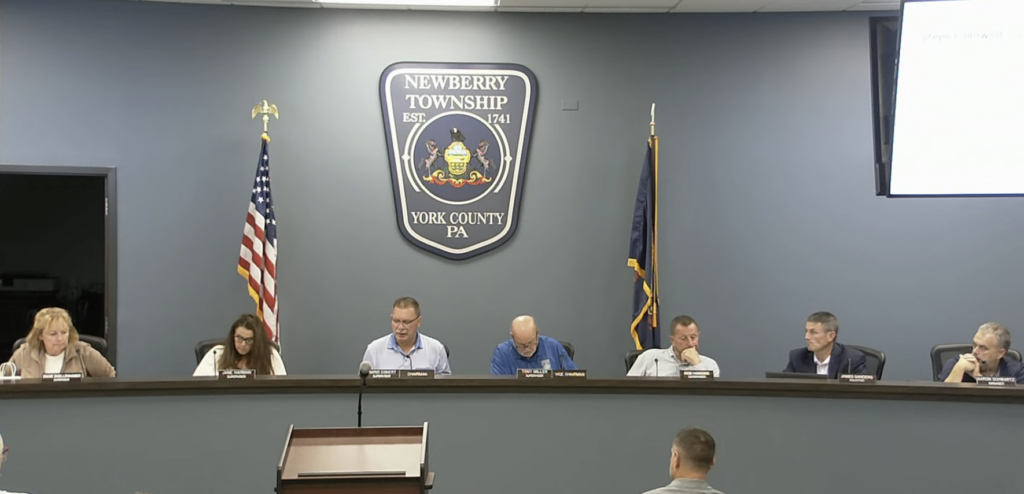
A South-Central Pennsylvania town has decided to limit new data centers, boxing them into two industrial districts while giving local leaders the final say on whether they even get a conditional use permit.
Newberry Township leaders, in a vote Oct. 13, took th action after residents and planning commissioners urged supervisors to limit the law to only one industrial district for data centers.
Newberry’s new Ordinance 442 allows data centers as a conditional use in the general industrial and rural industrial districts. A developer would have to bring a proposal before the Board of Supervisors and show that it meets the ordinance’s standards. The township solicitor said no data center plan had been submitted for the township to assess.
“These ordinances aren’t in place to invite data centers to come into the township,” Township Manager Aaron Schwartz told residents. “It’s to regulate if they were to try to come into the township, because we can’t just say no.”
Newberry Township had an estimated 16,377 residents in 2025, according to the U.S. Census Bureau. Median household income was $95,357, and 94.4 percent of occupied homes were owner-occupied, based on 2020–2024 Census estimates.
The rural industrial district was at the center of the dispute. Planning Commission Chairman David Parsons said the district covers about 133 acres near York Haven and is intended for light industrial uses.
The township Planning Commission voted 5-0 on July 13 to recommend approval with changes, including removal of rural industrial. The York County Planning Commission reviewed the ordinance Aug. 18 and recommended adoption.
The township commission’s vice chairman, Brian Rehbein, asked why the district remained in the version before supervisors.
Schwartz said he had forwarded the commission’s proposed changes to the board but recommended retaining rural industrial. He and several supervisors argued that limiting data centers to the general industrial district, which Parsons said covers about 201 acres under the township comprehensive plan, could leave the ordinance vulnerable to a legal challenge.
The figure describes a zoning district, not land assembled or available for a project.
Supervisor Jane Harman disagreed. “I’m concerned about rural industrial,” she said before the vote. Harman said the board should give greater weight to the Planning Commission’s work and opposed adopting the ordinance as written. The measure passed with her dissent.
The ordinance sets a 200-foot minimum setback from property lines for principal data center buildings and 400 feet from residential districts or existing homes off the site. It requires a 100-foot landscaped buffer next to residential or agricultural zoning, existing homes and similar sensitive uses and a 50-foot buffer along roads and adjoining industrial properties.
Buildings are limited to 50 feet, although supervisors may allow up to 65 feet during conditional-use review.
Parsons said the township Planning Commission also proposed 500-foot setbacks, which Schwartz said would leave too little buildable land on small parcels. Schwartz said the township lowered the decibel limit at the commission’s suggestion.
A developer must submit an acoustic study before construction. The ordinance limits data center sound to 50 dBA at homes and other designated sensitive locations and 60 dBA at nonresidential property boundaries. It also requires a study after construction, before an occupancy permit is issued. The township may require another study if complaints or changes at the facility suggest a problem.
Water-based cooling must use a closed-loop system; once-through systems that continuously discharge cooling water during normal operation are prohibited. That requirement does not eliminate water demand.
The ordinance permits public water, groundwater, surface water or reclaimed water for makeup water and other facility needs, and requires a water-source analysis. A proposal relying on wells or other nonpublic supplies would face a further study of effects on nearby water resources.
Applicants also must document utility needs, backup generators, emergency access and potential effects on public services. Routine generator testing is limited to 7 a.m. to 7 p.m. Monday through Saturday.
An on-site generation system supplying a data center’s normal operating power would be treated as a separate principal use requiring its own approval, unless supervisors find it incidental to the data center. A major expansion, including an increase of more than 25 percent in electrical demand, would require new conditional-use approval.
Before receiving a building permit, an operator must post financial security equal to 110 percent of estimated decommissioning costs. The ordinance requires annual updates of ownership and emergency-contact information, along with a fire safety inspection report, but does not require annual reports of electricity use, water consumption or operating noise.
That choice reflects a gap found in a published review of 100 local data center laws. Nearly every measure addressed zoning, while only about 10 percent required annual operational reporting. The review found that local governments commonly set conditions before construction but less often require operators to document their effects after opening.
Other communities have taken time to write those rules. A separate published review found that nearly 100 local governments in more than 30 states have considered or adopted moratoria or similar pauses, generally while studying land use, power, water and noise. Newberry chose to put standards in place now.
Resident Stephen Myers argued that more neighbors should have received notice and urged the board to delay its vote. Parsons also asked supervisors to consider tabling the vote. Chairman Mario Eckert acknowledged that the township could do a better job alerting residents. Supervisors proceeded.
Supervisor Diane Shellenhamer said they could revisit the ordinance at a later workshop. The ordinance takes effect five days after adoption. For any developer that comes forward, the adopted rules now set the terms of that first application.
Leave a Reply