News
Trump administration sues NAACP to kill pollution case against xAI
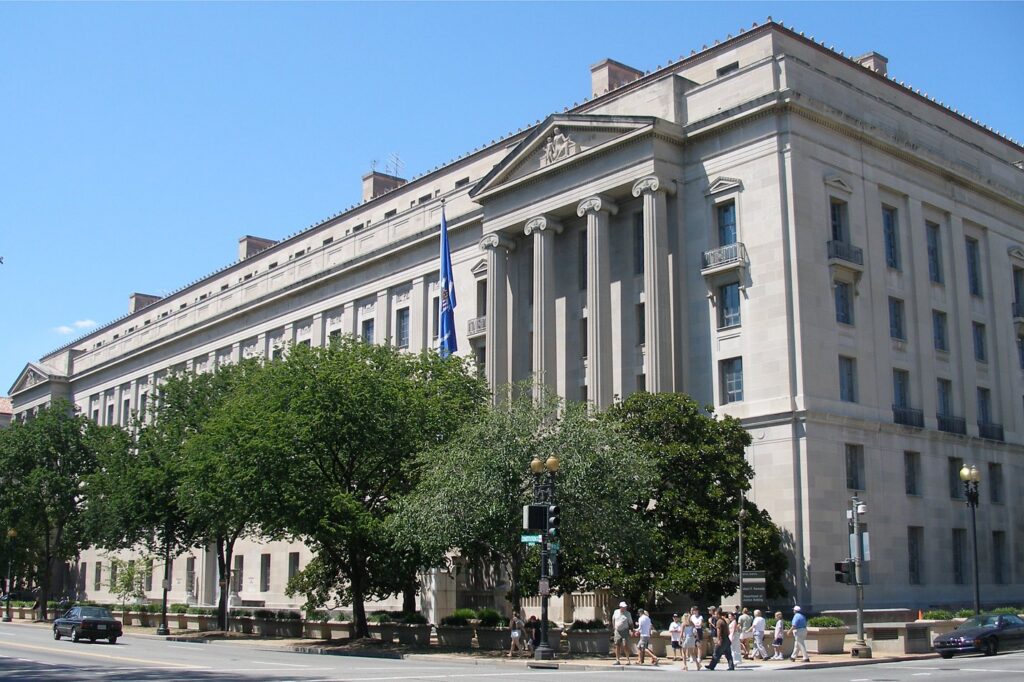
The Justice Department has filed a claim against the NAACP seeking a court declaration that it can end the group’s Clean Air Act lawsuit over gas turbines at a Southaven, Mississippi, power plant serving xAI’s data center.
The filing came four days after a federal judge rejected the government’s dismissal request.
The crossclaim, filed Friday within the existing lawsuit, asks Chief U.S. District Judge Debra M. Brown to declare that federal intervention in a citizen suit includes a right to dismiss the NAACP’s case, and that the case “cannot proceed against the objection of the United States.”
Brown ruled Monday that the Clean Air Act allows the government to join the case and gives it no power to end the NAACP’s suit.
Brown directed the government to file a pleading by Friday if it wanted to participate in the case. The crossclaim, titled a complaint for declaratory relief, was filed that day.
The government had already tried to take the dispute to the 5th U.S. Circuit Court of Appeals after Brown said at an August telephonic status conference that she intended to deny dismissal. In her written order, Brown said the appeal was premature because her remarks at the conference were not a ruling.
The appeals court had denied the government’s request to pause the case pending the appeal.
The NAACP and its Mississippi State Conference sued xAI and its subsidiary MZX Tech in April. They allege that gas-fired turbines at the plant lack required permits and approvals and fail to meet emissions limits, pollution-control and monitoring requirements under federal and Mississippi law.
The NAACP’s complaint says the plant powers xAI’s Colossus 2 data center across the state line in Memphis. The plaintiffs seek an order stopping operation until required permits and controls are in place, along with civil penalties of up to $124,426 per day per violation, payable to the U.S. Treasury.
Mississippi’s environmental agency determined that its air plan did not require permits for the temporary turbines, a finding the NAACP disputes. The government says the state declined to pursue the alleged violations.
The crossclaim also cites a letter from Gov. Tate Reeves stating that a shutdown forced by the lawsuit “would create an immediate and substantial disruption to the State’s economy.” The NAACP has asked Brown for a preliminary injunction, and xAI and MZX Tech have moved to dismiss the suit. Brown has not decided whether the turbines need permits or whether xAI violated the Clean Air Act.
The crossclaim says the NAACP seeks to enforce federal law, including through civil penalties payable solely to the Treasury. “The power to execute federal law belongs to the Executive Branch,” it says. It argues that the Clean Air Act and the Constitution give the government control over enforcement decisions, including a decision to take no action, and that reading the law to let private citizens override that control would “impermissibly encroach on the Executive Branch’s authority.” The government also seeks its costs.
In rejecting the same argument, Brown wrote that Congress intended to allow citizens to sue when regulators decline to enforce the law and specified one way for government enforcement to preclude such a suit: federal or state officials must begin and diligently prosecute their own civil action. The EPA has brought no enforcement case against xAI or MZX Tech.
The government says the turbines support xAI’s Grok system. Its earlier motion included a declaration by Cameron Stanley, the Defense Department’s chief digital and artificial intelligence officer. The crossclaim quotes Stanley calling Grok’s continued operation “a matter of paramount national security” and saying it “enabled U.S. forces to deploy over 2,000 munitions to 2,000 distinct targets within 96 hours” during Operation Epic Fury.
Stanley warned that limits on energy supply or reserve computing capacity could impair future use of tools by military and civilian personnel. Brown said the government’s national security rationale was irrelevant to its earlier motion to dismiss.
In 1990, Congress considered an amendment that would have let the EPA administrator, after intervening in a citizen suit, take over as plaintiff on claims for civil penalties and end the citizen’s penalty claims. Congress rejected it. Brown said that showed, at most, that some members of the 1990 Congress believed the law did not let the administrator end a citizen plaintiff’s claim.
Leave a Reply