News
Amid Pressure, A Data Center CEO Makes a Direct Pitch to Shareholders
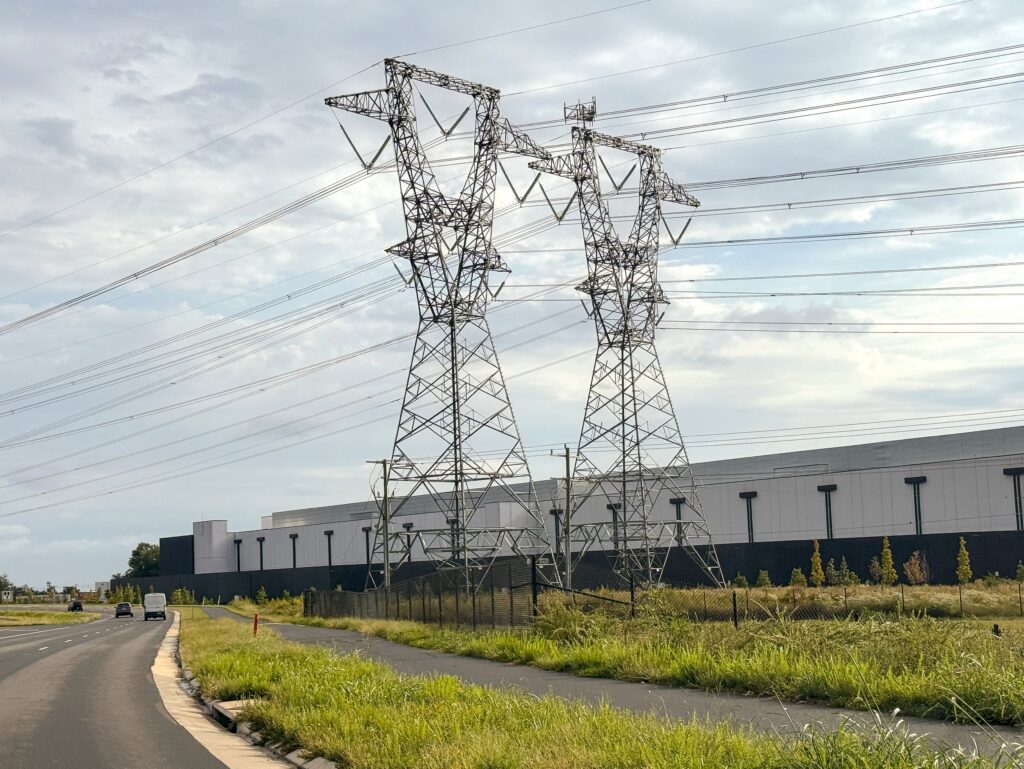
Host Digital’s chief executive is asking shareholders to judge its data center plan by a harder measure than megawatts or a long-term lease: whether it can finance and deliver a working building.
The company, headquartered in Hollywood, Florida, develops, owns and operates U.S. data centers for AI and other computing workloads.
Harmol Samra, the company’s CEO, made that case in an Oct. 19 letter to shareholders, his second in three weeks, issued as a press release and filed with the SEC after a sharp drop in its stock, as investors question the debt and returns behind the U.S. AI buildout.
“I think the market wants proof that we can fund and deliver this building without crushing shareholders through dilution, and honestly, that’s the right standard. A megawatt on paper doesn’t do much for anybody. A megawatt that’s energized, leased, financed, built, and collecting rent is what creates value per share,” Samra wrote.
Host became a public data center landlord on Sept. 17, when its data center business merged into Healthy Choice Wellness Corp., a natural-food grocer that has traded on the NYSE American since 2024. The 19 grocery stores in six states remain in the combined company. Host’s first project in northeast Oklahoma has a signed 15-year lease.
Construction financing is still being finalized, and rent is expected to begin when the facility is delivered. Samra’s letter answers questions about interest rates, construction funding and what shareholders will get from the project.
Host Digital stock was down about 78 percent year to date through the Oct. 19 close, falling from a split-adjusted $8.785 on Dec. 31 to $1.92.
But the questions reach well beyond Host. Developers are racing to secure power, electrical equipment and tenants while trying to raise the money to turn sites into operating data centers. The cost of that money is visible in CleanSpark’s $2.28 billion sale of 7.875 percent senior secured notes in September to build a 175-megawatt campus in Georgia leased to a Meta subsidiary.
The sequencing is visible in Applied Digital’s North Dakota power agreement with Base Electron, which covers a proposed 1,200-megawatt gas plant that still has to be financed. A lease and a power arrangement each move a project forward. The construction bill is paid with borrowed money or new equity.
Investors also are asking whether AI demand will support the scale and cost of the buildout. A closer look at high-yield data center debt described how a small but growing share of the boom is drawing on riskier borrowing. The bubble question remains open. Riskier debt puts more weight on contract terms, borrower credit, construction costs and the time between committing capital and collecting rent. For smaller public developers, a change in financing terms can quickly alter the economics they have presented to shareholders.
Host says its model avoids the risk of buying graphics processors that may need replacement within a few years. It plans to own the land, buildings, power rights, electrical systems and cooling, while tenants supply the computers. Host says it will deliver facilities on both a turnkey and a powered-shell basis. Samra’s letter emphasizes turnkey: a fully built facility ready for a tenant to install equipment. That approach can support higher rent, Samra said. It also requires more capital and more work before delivery.
At Site I, Host says 55 megawatts of power are available to its customer. The site already had an industrial building and a utility-owned substation when the company took it on. Host is targeting delivery in the first quarter of 2027. It says the 15-year, take-or-pay lease starts at about $67 million in annual rent, rises 3 percent a year and totals about $1.25 billion over its base term. The tenant would pay operating expenses, including electricity.
Those figures are contracted base rent over 15 years. Rent begins when Host completes the buildout, meets the customer’s requirements and finances the remaining work. Project debt would then be serviced from the rent. Samra argues that fixing the gap between borrowing costs and lease income for the life of the contract can protect returns if interest rates remain elevated.
Credit support is central to that pitch. Samra described the tenant as a large privately held cloud infrastructure company and said Host expects its lease to be backed by a U.S.-based, investment-grade global technology company. Samra identified neither party. Host says that support should allow it to obtain investment-grade project debt and finish Site I without another equity raise. The backstop and the loan terms are company expectations until financing closes.
The market has given Host little room for a long wait. Samra said the company was valued at about $385 million when it closed a September offering and at less than $100 million when he wrote the letter. Host’s stock closed at $2.50 on Oct. 15, according to a preliminary SEC prospectus. The same filing says Host raised about $17.5 million before fees in a September stock offering at $8 a share, completed four days after the merger closed.
The prospectus, filed Oct. 16, registers up to 45.385 million shares for possible resale by existing holders. Host flags the registration as a potential source of selling pressure. The company would receive no proceeds from those sales. The registered total exceeds the 26.36 million shares outstanding as of Oct. 1 because it includes 19.9 million shares issuable on exercise of pre-funded warrants and 68,592 on conversion of preferred stock.
The largest registered sellers are BDS Infrastructure LLC, whose sole member is Samra, and 10X Master LLC, controlled by Hans Thomas, each holding 10,119,047 shares, or 38.39 percent of shares outstanding. Funds advised by Graham Capital Management hold all of the pre-funded warrants, subject to a 9.99 percent ownership cap. Shares awarded to officers and employees in the merger vest Nov. 30. The filing is preliminary, and registered holders may sell some, all or none of their shares.
Host’s strategy is to find sites with roughly 20 to 100 megawatts of grid power already available or expected soon. That places a premium on access to electricity at a time when power and equipment delays are reshaping data center deals. It also means each proposed acquisition has to be tested against the cost of finishing the facility and the quality of the lease.
Host Infrastructure Holdings LLC, the sponsor, develops the sites and is owned and controlled by Host’s founders, including Samra. It has granted Host a right of first offer and first refusal for 24 months on data center assets it intends to contribute to a public company, according to the prospectus. Samra wrote in a Sept. 29 letter that each proposed acquisition from the sponsor has to be judged on what its terms mean for Host shareholders.
Site II is next on that list and would come to Host through that sponsor arrangement. Samra said the second northeast Oklahoma site has a signed 12-year take-or-pay lease worth roughly $391 million in base rent and described it as energized.
The letter’s forward-looking statement refers to a potential acquisition of Site II. Host has not acquired Site II. The lease value would belong to Host only after the company acquires, funds and delivers the project.
For now, Host has given investors three markers. It plans to finalize Site I financing, complete the buildout on budget and deliver it in the first quarter of 2027, when rent is expected to start. It will continue work on additional sites, including Site II. Those steps will show whether the lease and power access can become an operating asset without the dilution Samra says shareholders fear.