News
A Small Texas City’s data center fight puts city leaders on the hot seat
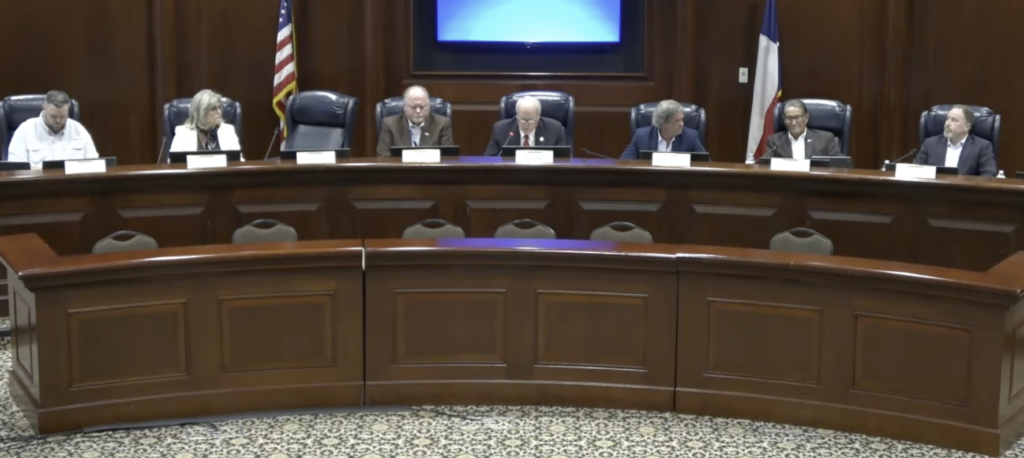
The city has yet to receive a development application for Project Patriot, a proposed data center and power plant. It already has five petitions to recall elected officials over how they handled the project. Four of those officials refused to resign at a special meeting Monday; dozens of residents walked out, and Mayor Jim Jarratt called a recess. No recall election was ordered.
The City of Granbury, Texas shows how the politics of the AI buildout can run ahead of the engineering. The dispute centers on a proposed campus at the former Knox Ranch. Dallas-based Bilateral Energy says it would generate its own power and use closed-loop cooling.
Those plans remain preliminary: the city has received a concept plan but no site plan, and has not approved construction. Yet decisions already made about the land have put the council’s judgment, and its relationship with residents, under scrutiny.
“This recall isn’t simply about a policy disagreement; it is about a complete and total breakdown of trust,” resident Rachel Jacobson told the council. She said the petitions drew more signatures than the targeted officials had received in their elections and asked them to resign. Other speakers questioned whether the city had been candid about what might be built, whether residents outside city limits had a voice, and whether the prospect of economic development had overtaken those concerns.
The petitions name Jarratt, Mayor Pro Tem Bruce Wadley and council members Skip Overdier, Zeb Ullom and Greg Corrigan. Wadley was away on a previously scheduled trip. Council Member Angela Parker was not targeted. Ullom suggested that was because she voted against the Knox Ranch rezoning; the city’s minutes confirm she cast the lone opposing vote. When Overdier began speaking, residents filed out and Jarratt paused the meeting for 15 minutes.
Granbury had an estimated 13,263 residents in 2025, up 21 percent from its 2020 estimates base, according to the U.S. Census Bureau.
The project has exposed the limits of representation in a growing city’s outer reaches. Craig Jackson told the council that his home is in Granbury’s extraterritorial jurisdiction, where residents cannot vote for its council, but that its January and April land decisions affect his family. Recall organizer Jacob Herbold said trust was damaged by the council’s handling of annexation, zoning and public information. Dave Eagle raised a separate question: if several officials were recalled, how would the city maintain the four members needed for a quorum?
Even the petitions became contested. Resident Sally Walter said she signed what she understood to be a request for more information about data centers, only to find her signature on five recall petitions. Jarratt and Corrigan said other signers reported similar experiences. The meeting did not establish how Walter’s signature appeared on the petitions.
Jarratt said his own petition included signatures from people who were not registered city voters, signatures circulators had not witnessed and signers who had not been told they were seeking a recall. He denied violating the Texas Open Meetings Act. “I will not resign,” he said.
Overdier also denied an open-meetings violation and said a court, rather than the council, must decide his petition’s validity. Ullom dismissed accusations involving open meetings, zoning and public notice. He argued that rezoning Knox Ranch was required because the property had vested rights and gave the city a way to apply new safeguards to a future data center or power plant. Corrigan said he had considered resigning but would serve through November, when his third and final term ends.
The council unanimously annexed 2,090 acres at Knox Ranch on Jan. 6 at the request of owner Granbury Reddy Land Partners. On April 7, it voted 5-1 to zone the tract industrial after the Planning and Zoning Commission recommended denial. That same day, the council adopted standards for data centers and power-generation facilities addressing noise, screening, lighting, water systems and traffic.
Residents have also filed a separate lawsuit alleging an Open Meetings Act violation connected to a council tour of a Dallas-area data center before the annexation vote. The allegation remains contested.
The project’s regulatory path is already more complicated than a single city vote. A Texas Commission on Environmental Quality registration issued to Bilateral Energy in 2025 authorizes emissions associated with eight turbines and 87 generators at 1225 Meadow Wood Road, subject to its terms. The city says a concept plan and state permits can establish rights under earlier rules. The next city step is a detailed development application, which staff would review under applicable requirements. The company has not disclosed generating capacity, and no application timetable was announced Monday.
The recall path is unresolved, too. The city rejected the petitions in July, saying they lacked enough valid signatures and sufficiently specific allegations; its initial review counted only 26 valid signatures on Jarratt’s petition. Organizers reported roughly 1,446 to 1,470 signatures on each petition. The city later agreed to present them to the council. Its charter says that if targeted officials do not resign, the council must order a vote on the earliest date state law permits. The city says that date is in May 2027, after the November election deadline. Organizers argued November was still possible, but an appeals court declined on Sept. 21 to order the city to act on a request it said no longer required resolution. No recall date has been set. Overdier’s and Corrigan’s regular terms end this November; those of Wadley, Ullom and Jarratt extend beyond May.
Leave a Reply