Data Centers
The Pentagon Is Putting $750 Million Behind a Brazilian Rare Earth Supply Line
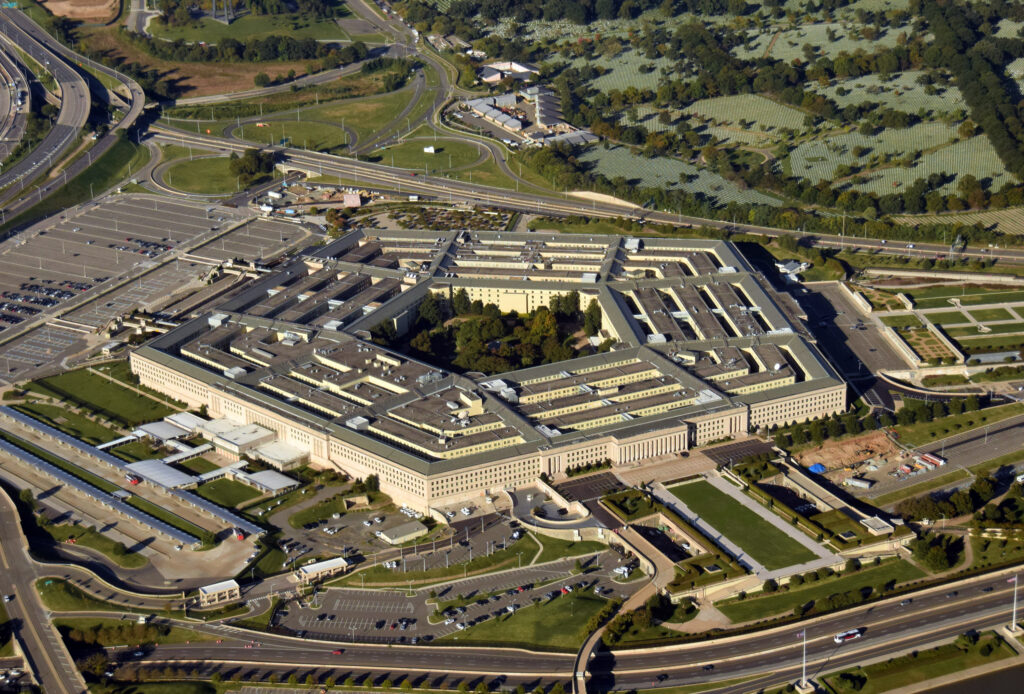
The Pentagon is putting $750 million behind a deal to help give a U.S. company control of Brazil’s Serra Verde mine – a quarter of a billion dollars more than it originally agreed to.
That is the number to watch inside USA Rare Earth’s newly completed $1.55 billion financing package, according to a regulatory filing this morning. The Nasdaq-listed company said Monday the Department of War increased its commitment to a special-purpose vehicle that will buy all of Serra Verde’s Phase 1 rare earth production under a 15-year offtake agreement.
The Pentagon is capitalizing the buyer with $750 million and has separately promised to purchase at least $300 million of rare earth products from it over five years. A Tier 1 bank has supplied a commitment letter for a $500 million senior secured revolving facility. Together, those pieces bring the vehicle’s planned capitalization to $1.55 billion.
The department is not only helping finance this supply. It is guaranteeing demand.
That money satisfies one of the final financing conditions for USA Rare Earth’s roughly $2.8 billion acquisition of Serra Verde, announced this spring. Serra Verde’s shareholders approved the merger by written consent when the deal was signed; USA Rare Earth’s shareholders are scheduled to vote Friday, Aug. 28, and the company says the merger could close promptly afterward if the remaining conditions are met.
USA Rare Earth says the revised agreement allows the merger condition to be satisfied by the commitment letter itself. The acquisition could therefore become obligatory even if that $500 million has not reached the vehicle.
The company says the revised agreement allows the merger condition to be satisfied by the commitment letter itself. The acquisition could therefore become obligatory even if that $500 million has not reached the vehicle.
Rare earths are a group of hard-to-mine metals used to make the most powerful magnets available, and those magnets turn up in more of the AI data center boom than most people realize. Four of them do most of the work — neodymium, praseodymium, dysprosium and terbium — and they run the motors in the fans and pumps that keep server halls from overheating, sit inside the hard drives that store data, and are part of the backup generators and electrical gear that feed these buildings power.
Those same four metals are what this Pentagon-backed deal is meant to secure, and China currently controls most of the world’s supply of them. The connection isn’t the biggest constraint on data centers — power, transformers and chips matter more — but the effort to build AI infrastructure and the effort to reduce reliance on China for rare earths are competing for the same materials.
Last year, the Pentagon made a $400 million equity investment in MP Materials, the country’s largest rare earth miner. The package also included a $150 million loan, a 10-year price floor for neodymium-praseodymium oxide and a commitment to take the magnets from a new factory. Warrants could make the government MP’s largest shareholder with roughly 15 percent of the company.
At the start of this year, USA Rare Earth unveiled a separate federal package of up to $1.6 billion. The Commerce Department later finalized the arrangement: up to $277 million in direct funding and as much as $1.3 billion in senior secured loan capacity. In return, the government received 16.1 million shares and warrants for about 17.6 million more, putting its potential ownership between roughly 8 percent and 16 percent.
Last month, the Department of War also put $25 million into ReElement Technologies to expand rare earth recycling and refining capacity.
The checks are different sizes, but the operating model is becoming clear. Washington is no longer relying on grants alone. It is taking equity, lending money, establishing price floors, underwriting buyers and signing long-term purchase agreements across the mine-to-magnet chain.
The Serra Verde structure may be the cleanest expression of that model.
The Pentagon does not receive equity in USA Rare Earth through this deal. Its money goes into the special-purpose vehicle, which holds a take-or-pay contract for all of Serra Verde’s Phase 1 production. The agreement places floors under neodymium, praseodymium, dysprosium and terbium — the four magnetic rare earths used in high-performance permanent magnets. USA Rare Earth calls the dysprosium and terbium provisions the industry’s first and only price floors for those heavy rare earths.
Serra Verde matters because its Pela Ema operation in Goiás is already producing. USA Rare Earth describes it as the only commercial ionic-clay rare earth mine outside Asia and the only operation outside the region producing all four magnetic rare earths. More than $1 billion has gone into the project.
That makes it different from the long list of critical-mineral projects still waiting on permits, financing, construction or a first customer. The mine exists. The question is whether its output can be separated, converted into metal and made into magnets through a supply chain that does not run through China.
USA Rare Earth says the merger gives it the pieces to try. Serra Verde would supply the mine. Its Less Common Metals subsidiary in the United Kingdom produces rare earth metals and alloys. Its Stillwater, Oklahoma, plant began commercial magnet production earlier this year. The company also has processing and separation work underway in Colorado and plans a larger metal-and-magnet plant in South Carolina.
That is a mine-to-magnet strategy spread across several countries, facilities and financing packages. It is more integrated than most Western competitors. It is not yet a seamless operating chain.
USA Rare Earth Executive Chairman Michael Blitzer called Serra Verde one of the world’s most advanced rare earth projects and thanked the government for its “strategic support and upsized funding commitment.” The company also warns that government support could be reduced, delayed or withdrawn because of policy changes, budget constraints or politics. The merger can still slip or fail if the remaining conditions are not met.
The upshot: the Pentagon is not simply betting on a Brazilian mine. It is putting capital behind the buyer, placing floors under strategically important materials and committing government demand for the finished output.
Money can make a non-Chinese supply chain financeable. It cannot make every link operational at once. If the acquisition closes, USA Rare Earth will control one of the few rare earth mines outside Asia already producing the materials defense-grade magnets require. The next test is whether it can move those materials through the rest of its network at commercial scale — before Washington’s financing becomes another promise waiting on a factory.