News
Power company Exelon identifies about 34 GW of potential data center demand
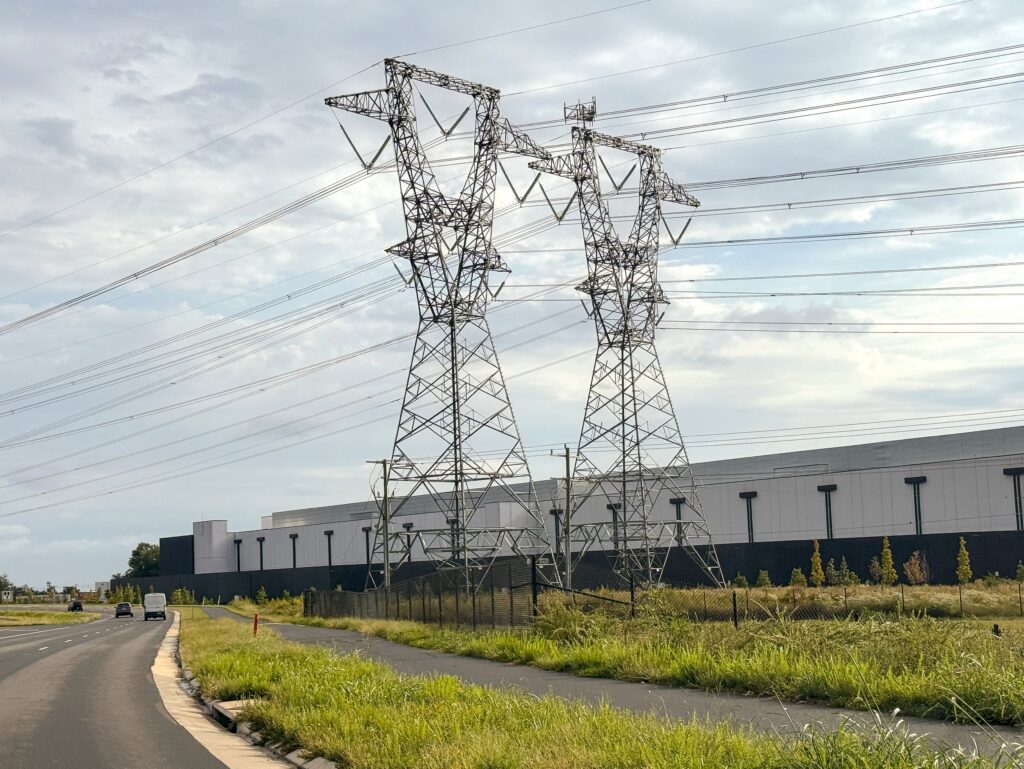
In a new filing and presentation to investors, power company Exelon is reporting about 11 gigawatts of high-probability data center demand and about 23 GW more in its future pipeline, a combined 34 GW of potential load.
The figures, disclosed in the company’s Oct. 30 third-quarter earnings presentation, describe prospective electricity demand from projects at different stages of development. Actual data center load in northern Illinois was below 1 GW through September, according to a chart in the presentation.
Exelon, headquartered in Chicago, operates regulated utilities that transmit and distribute electricity and deliver natural gas. Its six utilities are ComEd, PECO, Baltimore Gas and Electric, Pepco, Delmarva Power and Atlantic City Electric. Exelon separated its power generation and competitive energy business into Constellation in 2022.
ComEd accounts for about 9 GW of Exelon’s high-probability data center demand, with its Mid-Atlantic utilities accounting for about 2 GW. Exelon described that category as projects in advanced design or backed by transmission security agreements approved by the Federal Energy Regulatory Commission.
About 45 percent of the high-probability category has those agreements, backed by approximately $1.2 billion in collateral, according to the presentation. The presentation says FERC has endorsed Exelon’s agreement framework as a model for protecting customers and improving certainty for projects waiting to connect to the grid.
The additional 23 GW comprises about 14 GW at ComEd and about 9 GW in the Mid-Atlantic, in current or future cluster studies scheduled to conclude in 2026 and 2027.
Exelon said PJM Interconnection, the regional grid operator, fully approved the large-load adjustments it submitted in 2025 and 2026. Exelon’s 2027 submission, which uses enhanced commitment criteria, aligns with the approximately 11 GW high-probability figure. The company also reported roughly 28 percent compound annual growth in actual northern Illinois data center demand between the comparable year-to-date periods in 2022 and 2026.
A Lawrence Berkeley National Laboratory report published in June 2026 projects data centers could consume 11.8 percent of U.S. electricity in 2030, with scenarios ranging from 9.5 percent to 15.3 percent. The laboratory built those estimates from planned equipment shipments, per-device electricity use and cooling performance.
Exelon’s current four-year capital plan calls for $41.7 billion in spending, including $16.3 billion for transmission from 2026 through 2029. Beyond that plan, it identified $12 billion to $17 billion in potential transmission investment, largely expected in 2030 and later. More than $1 billion of the identified opportunity would support connections for committed, high-density electricity demand.
ComEd’s grid plan before the Illinois Commerce Commission proposes $15.3 billion of investment from 2028 through 2031 to meet load growth and state policy priorities. An administrative law judge’s proposed order was posted Oct. 14, and a commission order is expected by Dec. 15.
Exelon listed a proposed 500-megawatt Atlantic City Electric battery project in New Jersey, costing about $1 billion, with commercial operation targeted for 2030 and a final regulatory order expected in the first quarter of 2027. That project is outside the current capital plan.
The company also identified a future storage opportunity of 1.5 GW to 3.5 GW, representing $3 billion to $7 billion beyond its plan.