Nuclear
Alabama Nuclear Plant’s Post-Fukushima Vent Leaked Beyond Its Safety Limit
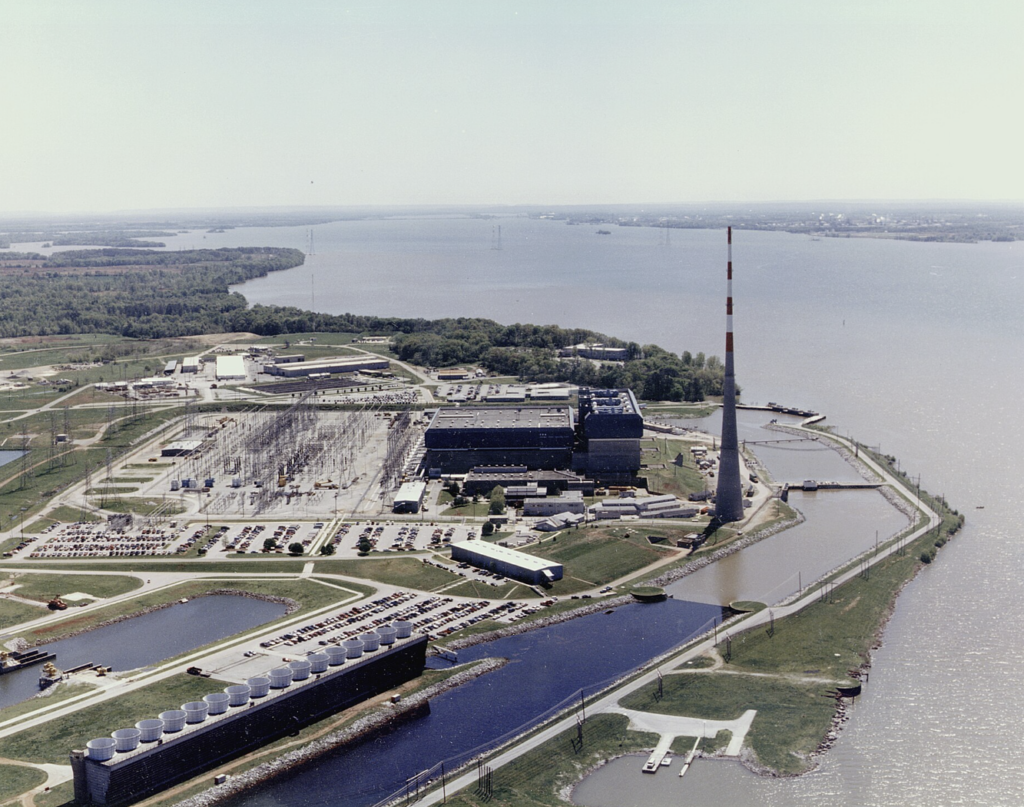
Both valves that seal an emergency vent on a 52-year-old Alabama nuclear reactor leaked beyond federal limits in testing yesterday, a condition that could let more radioactive material escape during a severe accident than the plant’s safety analysis allows for.
The Tennessee Valley Authority reported the Oct. 7 finding at Unit 1 of the Browns Ferry Nuclear Plant near Athens, Alabama, to the Nuclear Regulatory Commission that evening, according to an event notification posted today on the NRC website. Unit 1 is currently shut down for refueling.
The notification states:
“On 10/07/2026, at 1654 CDT, during a refueling outage at zero percent power while performing local leak rate testing on the hardened containment vent system, which is part of the primary containment boundary, an engineering evaluation determined that the Unit 1 leakage rate did not meet 10 CFR 50 Appendix J requirements specified in Technical Specification 5.5.12. Leak rate testing identified excessive leakage through 1-FCV-064-0221, HARDENED CONTAINMENT VENT INBD ISOL VLV and 1-FCV-064-0222, HARDENED CONTAINMENT VENT OUTBD ISOL VLV.”
TVA stated in the notification that there was no impact on the health and safety of the public or plant personnel.
A TVA spokesman did not immediately respond to a request for more information.
The valves involved sit on the plant’s hardened containment vent. Containment is the sealed steel and concrete structure around the reactor, built to hold radioactive material inside during an accident. The vent is a pipe that gives operators a way to release pressure and heat from containment during a severe accident. Until operators decide to open it, two valves keep it shut: one closer to containment and one farther out along the line.
What the test measures
Federal rules require nuclear plants to periodically test the valves and openings in containment. Technicians close a valve, pressurize it to the highest pressure containment is expected to reach in a major accident, and measure how much gas gets past it.
The leakage limits come from the plant’s accident analysis. That analysis calculates the radiation doses the public and control room operators would receive in a major accident, assuming containment leaks no more than a set amount.
A failed test means that if an accident had pressurized containment while the valves were in this condition, more of the air and steam inside could have escaped through the vent line than the analysis assumes. If the accident also damaged the reactor’s fuel, that air and steam would carry radioactive material.
TVA’s report did not say how much the valves leaked, how far the result exceeded the limit, what caused the leakage, or whether the valves were in this condition while the reactor was running before the outage. The reactor was fully shut down, at zero power, when the condition was identified.
How it was reported
TVA filed the report under the NRC rule covering conditions that seriously degrade a plant’s principal safety barriers. That rule requires notice to the NRC within eight hours. TVA’s call came in at 8:32 p.m. Eastern time, about two hours and 40 minutes after the evaluation was completed. The NRC’s resident inspector at the plant was also notified.
Under federal rules, a plant that reports this type of condition generally must file a written Licensee Event Report within 60 days. That report typically includes the cause and the corrective actions.
A requirement born at Fukushima
The vent exists because of the 2011 accident at the Fukushima Daiichi plant in Japan. Browns Ferry’s three reactors are General Electric boiling water reactors with the Mark I containment design, the same basic design used at the damaged Fukushima units.
In March 2012, the NRC ordered U.S. plants with Mark I and Mark II containments, including Browns Ferry, to install reliable hardened vents. In June 2013, the agency replaced that order with Order EA-13-109. The new order requires vents that can operate under severe accident conditions, including after reactor fuel has been damaged.
The plant
Browns Ferry is owned and operated by TVA, the federally owned utility that supplies power across the Tennessee Valley region. Unit 1 began commercial operation in 1974. TVA applied in January 2024 to extend the plant’s licenses from 60 to 80 years, according to an NRC announcement. The NRC approved the extension in December 2025, allowing Unit 1 to operate until December 2053, World Nuclear News reported.
The plant’s license requires a containment leak testing program. In 2018, the NRC approved a license amendment that lengthened the maximum time between leak tests on individual containment valves from 60 months to 75 months.
NRC daily reactor status reports show Unit 1 at zero power since at least Sept. 24. Browns Ferry Units 2 and 3 were operating at full power on Oct. 7. TVA has not publicly said when Unit 1 will return to service, or whether the valve repairs will change that date.
Leave a Reply