Data Centers
In Truman’s Hometown, People Are Giving a Data Center Hell
On July 6, two days after the country’s 250th birthday, residents of Harry Truman’s hometown lined up at the City Council dais to tell their elected officials what they thought of the hyperscale artificial-intelligence data center rising in the Little Blue Valley.
They were not gentle.
“Nebius isn’t being a good neighbor,” Angie Lotz told the council. “They’re being a neighbor I wouldn’t wish on my worst enemy.”
Joannie Flanagan, a volunteer who said she knocked on hundreds of doors during a referendum drive and a successful recall campaign, told the council that “the people of Independence overwhelmingly oppose the Nebius hyperscale AI data center.” Then she paid homage to the city’s most famous son: “My buck stops with you, and we’re watching.”
“Nebius isn’t being a good neighbor. They’re being a neighbor I wouldn’t wish on my worst enemy.”
Angie Lotz, Independence, Missouri resident
The object of their anger is a roughly 493-acre project that, according to a new lawsuit filed on August 12, 2026, is planned to consume 800 to 1,200 megawatts — three to four times the power used by the entire city — while creating between 100 and 150 jobs. They capture the scale of the bargain Independence has made: an industrial project designed to inhale power on the scale of a city while employing roughly the population of a busy restaurant.
It all began in 2022. The residents, who are suing, say NorthPoint — the developer who started the data-center project — won industrial zoning under the guise of building warehouses and bringing jobs to the Little Blue Parkway area; the original application, the suit alleges, did not mention data centers. Confidential correspondence described in the residents’ lawsuit shows that by March 2024, the city manager was telling the mayor and council that NorthPoint was negotiating with a potential data-center user and that the city would need to amend its zoning code to make the deal work.
On May 20, 2024, the council passed an ordinance making “data processing and hosting” a permitted use in I-1 industrial districts. The petition says there was no public comment.
In December 2025, NorthPoint sold the site to Nebius Group, the Amsterdam-headquartered, Nasdaq-listed AI cloud company.
By then, the suit says, the city and the developer had spent months in closed meetings negotiating power, infrastructure and tax arrangements.
There were a flurry of NDAs signed by an assistant city manager in August 2025 and eight more partially executed nondisclosure agreements signed by the mayor and council members in November. It also describes minutes from one executive session as “almost completely redacted with only the attendees visible.” All of this happened before the words “data center” became a curse.
Flanagan went straight at that arrangement during the meeting.
“No elected official should sign an NDA with a corporation. Full stop,” she said. “This means that you are bound to a corporation to keep certain details secret from your own constituents, and it is an ethical failure.”
The lawsuit, brought by a group calling itself the Independence GUARD Alliance and four homeowners on Bly Road, is the sharpest instrument opponents have. Its sixteen counts attack nearly every step: the rezoning, the code amendment, the city’s handling of open-records requests, the power agreements, the tax deal and the construction itself.
The neighbors allege that grading work has covered their houses, cars and patio furniture in dirt; that noise and machinery have awakened them in the middle of the night; and that heavy trucks have damaged the narrow road they use to reach their homes. They also say the southern entrance to Bly Road was closed with ten days’ notice, forcing them onto a steep northern approach. All in a city known for its peace, quiet, and Truman lore.
Then there is the money. On March 2, 2026, the council voted 5-2 to authorize as much as $150.6 billion in industrial-revenue bonds for the data center and its servers. The suit says the structure abates 90 percent of normal property taxes for 20 years through payments in lieu of taxes equal to 10 percent of the ordinary bill, while also removing sales tax from construction materials and equipment.
Councilmember Cody Atkinson defended the project on July 6 by saying it would pay “roughly $140 million” into three public funds at full buildout. “This is an unprecedented amount of money to be able to take care of our community,” he said.
Opponents offered a wildly different ledger — “something like $6 billion over 20 years left on the table,” as GUARD Alliance representative Daniel Moorehead put it. The public record supplied with the case does not make either number easy to reconcile.
That is the pickle the council is in. Its members have already approved, in one form or another, the bonds, the power-purchase agreement, the energy-services agreement and the electrical switchyard. And then the night of the hearing, they unanimously approved two 180-day moratoriums, one on new data-center applications and another on battery-energy-storage systems.
Neither stops the Nebius project, which is already in the pipeline. The same night, the council called a special recall election against one of its own, First District Councilmember John Perkins, who abstained while the other six members voted yes.
Nebius, meanwhile, is not behaving like a company that expects to be stopped. On the same day the Independence lawsuit was filed, the company reported second-quarter revenue of $582 million, up a mind-blowing 454 percent from a year earlier. Its core AI-cloud business grew even faster, to $575 million, up 514 percent. It has signed an infrastructure agreement with Microsoft worth as much as $19.4 billion and another with Meta worth as much as $27 billion; Nvidia has taken a $2 billion stake. Nebius has become the poster boy for U.S. data centers.
Founder and CEO Arkady Volozh cast the company’s appetite for power as a matter of industrial destiny.
“Somebody needs to build the rest of the market, and that will be us,” he told investors on the earnings call that day. “This is our part.” Nebius raised its year-end contracted-power target to five gigawatts, and Volozh said its pipeline made it one of the few companies capable of building more than a gigawatt of new capacity in a year.
“Somebody needs to build the rest of the market, and that will be us. This is our part.”
Arkady Volozh, Nebius founder and CEO
Volozh’s history is more complicated than the shorthand deployed at the Independence podium. He built Yandex — “Russia’s Google” — into a company worth roughly $30 billion at its 2021 peak. The European Union sanctioned him in 2022, citing Yandex’s role in distributing state-media narratives and its ties to Russian state banks.
Volozh resigned from Yandex and called Russia’s invasion of Ukraine “barbaric” in 2023. He then engineered the sale of the company’s Russian operations in 2024. The EU removed him from its sanctions list in March 2024. He completed the renunciation of his Russian citizenship in February 2026 and now holds Israeli and Maltese citizenship.
There is no public evidence in the background material of a current working relationship with the Kremlin. There is abundant evidence that the company he now runs intends to build very big, very fast.
Nearly 1,100 miles east, a strikingly similar fight is playing out in Vineland, New Jersey. There, DataOne USA LLC is building a data center for Nebius, tied to a reported Microsoft compute contract, in the East Vineland industrial area off South Lincoln Avenue. As in Independence, critics say the zoning was set years in advance and out of view: redevelopment ordinances adopted in 2020 and 2023 permitted an assortment of uses but never named data centers. The application arrived in 2024, after the legal runway had been laid.
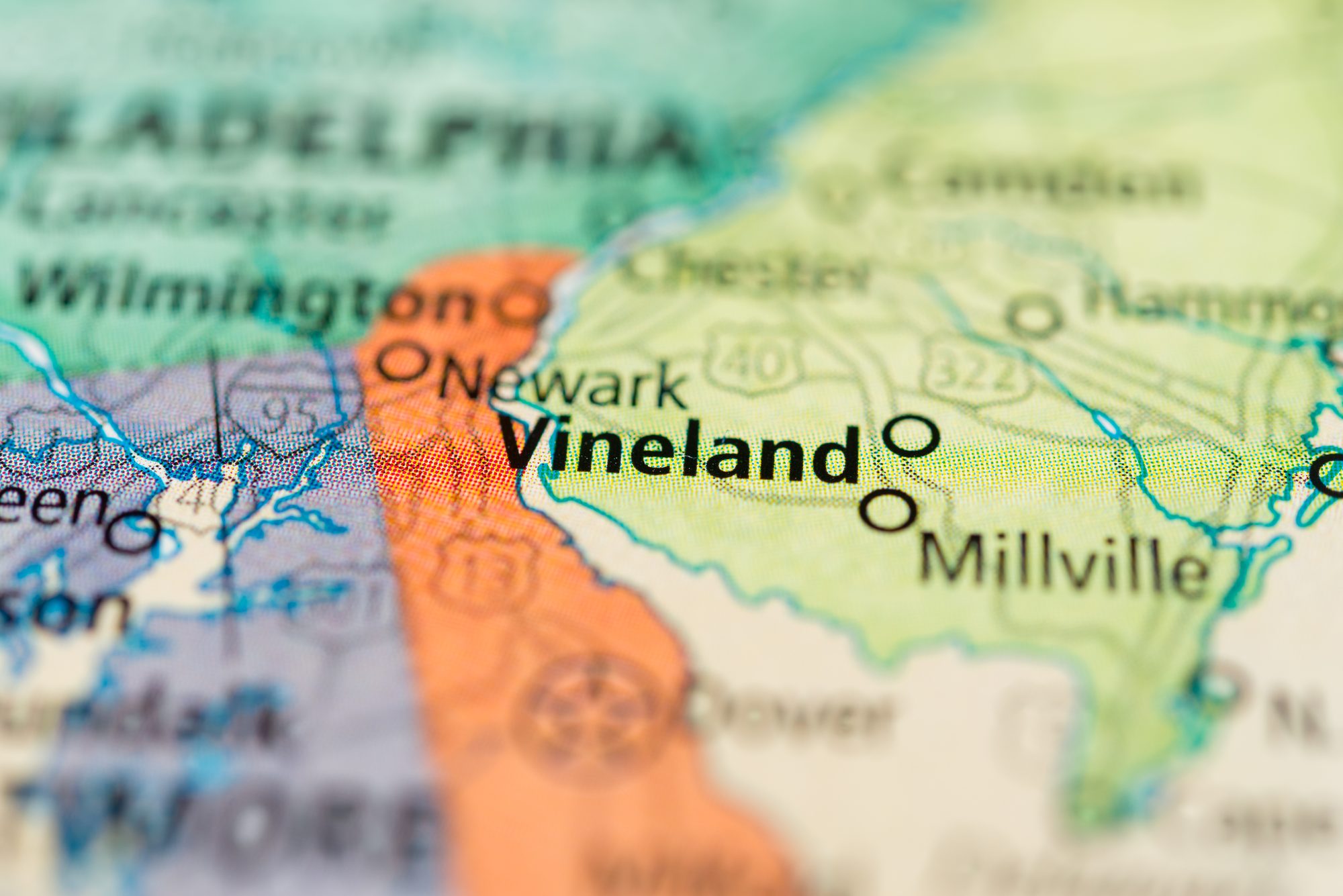
There are similarities between Independence and Vineland.
Neither location is easily characterized as rural or urban, and the communities differ sharply in size and composition. Independence has roughly 121,600 residents, is about 70 percent non-Hispanic White, and has a median household income of $58,500. Vineland has about 61,000 residents and is nearly 45 percent Hispanic, with a median household income of $67,900 in a pricier part of the country.
Both are small cities with small city councils.
The first Vineland building, about 129,622 square feet, is nearly complete and operating. DataOne is seeking approval for a second, roughly 587,980-square-foot building, along with about 300 megawatts of on-site power from Bloom Energy fuel cells and a proposed 1.5-million-gallon liquefied-natural-gas tank.
On January 13, 2026, the City Council unanimously granted the project a five-year tax exemption through a payment-in-lieu-of-taxes agreement, over sustained objections from residents.
The opposition there is loud, organized and difficult to wave away. At an August 5, 2026, Planning Board hearing at Vineland’s Landis Theatre, hundreds turned out and resident Helen Petrites submitted roughly 2,900 signatures.
“No one wants to live here anymore around the data center,” Petrites said. “It’s become a joke.” Another resident, Zac Landicini, told the board, “AI data centers are not essential to life in Vineland.” Neighbors have sued DataOne over the industrial hum, and the Sierra Club and Pinelands Alliance have turned the project into a statewide test case over what opponents call New Jersey’s “redevelopment loophole.”
“No one wants to live here anymore around the data center. It’s become a joke.”
Helen Petrites, Vineland, New Jersey resident
Then the city’s own code officials handed critics their strongest evidence. On August 6, 2026, Vineland stopped work on the LNG tank for lack of a construction permit. Four days later, it stopped installation of the Bloom Energy fuel cells, saying the work had proceeded with “no prior approvals, plans, or permits.” DataOne’s lawyer, Michael Fralinger, conceded at the planning hearing that “obviously transparency can always be better.”
Nebius says it has learned how to enter communities. On the August earnings call, chief communications officer Tom Blackwell described the company’s approach as “coming in early, being very open, transparent about what we’re doing, engaging the community, and actually answering the questions that come up.” He said that was precisely the approach Nebius was using in Vineland.
That may be the cleanest expression of the standoff. Nebius talks in gigawatts, contracted backlogs and annual capacity. The people living beside its sites talk in truck routes, dust, late-night machinery, utility bills and what they were not told.
The company is trying to build the rest of the market. Independence and Vineland are trying to decide how much of that market can be built around them — and who gets to know before the dirt moves.