Data Centers
AI’s real bottleneck is switchgear — and companies are rewriting deals to get it
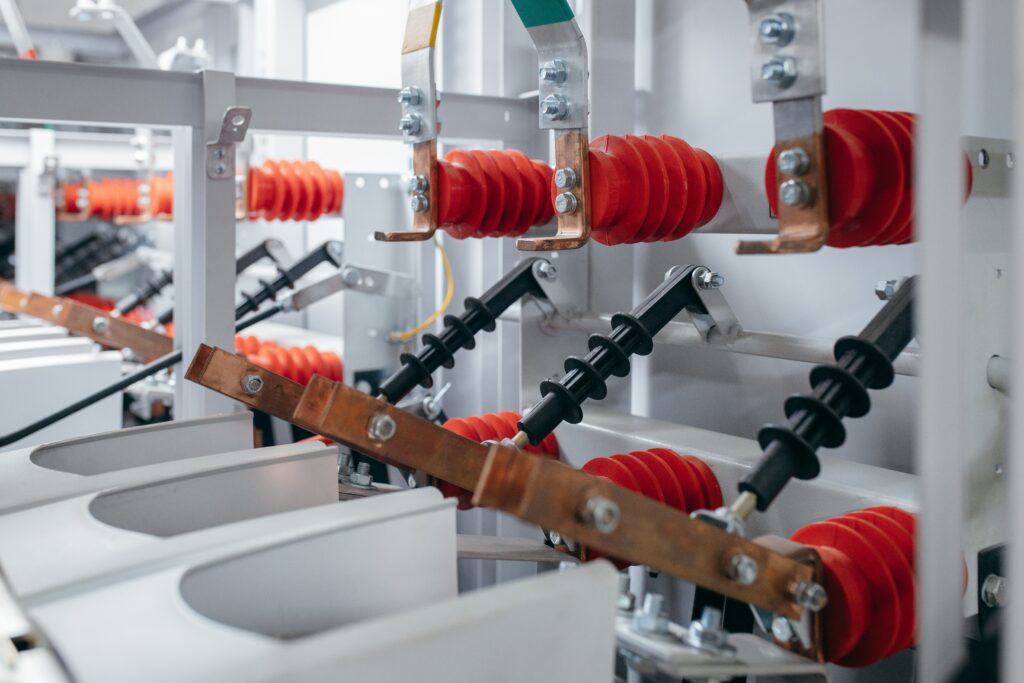
In a single week in August, three companies reorganized financing, manufacturing and operations around the equipment that connects compute to power. Grid operators moved on the same constraint from the other side.
Riot Platforms, a bitcoin miner that has expanded into building AI data centers, has already bought high-voltage transformers for a building in Corsicana, Texas, that is not ready to receive them.
On its Aug. 10 earnings call, Riot said a $573 million interim credit facility provided by Morgan Stanley will let the company move immediately on long-lead equipment — committing cash years before the load is energized. The financing is tied to a bigger bet: the same day, Riot disclosed a letter of intent for a 20-year AI lease at Corsicana with a “Leading Frontier AI Lab” — reported to be Anthropic, at roughly $9.1 billion over the term — with the facility funding initial development costs while an investment-grade credit backstop is finalized.
Money first, equipment second, building later. That is the AI buildout in miniature. The scarce asset is no longer just chips, land or generation. It is the electrical path between the grid and the servers: transformers, switchgear, switchboards and power distribution units. In the week ending Aug. 16, three companies described that path as a serious constraint. Each responded differently. Together, their moves show capital structures, acquisitions and operating plans being reorganized around electrical equipment.
Riot: Build it, and fund it, early
Riot’s answer is vertical integration — making critical equipment itself rather than buying it from outside suppliers — backed by early financing. The company called low- and medium-voltage switchgear and power distribution units, or PDUs, some of the most constrained long-lead components in data center construction. By manufacturing that equipment by itself, Riot says it can reduce the risk that substation delays outside its data centers will derail its own projects.
The capacity is real — and spoken for. Riot’s ESS Metron unit reported a $177.1 million engineering backlog, 90 percent tied to data centers. Manufacturing capacity is expected to grow 25 percent in 2026, and Riot plans to reserve part of it for its own builds. The Morgan Stanley financing closes the loop: Instead of waiting for construction financing to catch up with procurement, Riot can place deposits and lock in long-lead orders as factory slots open.
Its SEC filings should show what the executed facility documents actually allow: how much of the $573 million can go to switchgear, transformers and deposits, and what conditions Riot must meet to draw it.
Kingspan and Tecogen: Buy the factory or route around it
The next day, Ireland’s Kingspan, a maker of insulation and building materials, agreed to buy BMC Manufacturing for an initial 850 million euros. About 90 percent of BMC’s output is power distribution cabinets, a category that has historically included low-voltage switchgear. Kingspan said the deal roughly doubles its data center opportunity per megawatt, from about $500,000 to about 1 million euros. It also plans to convert a Glasgow, Kentucky, site through 2027, with U.S. production expected in 2028.
A building products company is paying a premium to move inside the electrical supply chain.
Tecogen, a maker of gas-fueled cogeneration systems and chillers, described the same shortage from the demand side on Aug. 13. Longer lead times for switchgear and other electrical equipment are delaying installations across its customer base. Some buyers are turning instead to gas-driven chillers and on-site generation. A shortage in one product line is rerouting demand into another, with reliability and emissions consequences that deserve scrutiny.
The bottleneck, measured
The U.S. Department of Energy (DOE) says lead times for critical grid equipment still run two years or longer. Some transformer prices have risen fourfold to ninefold in five years. In that market, a factory slot is not a scheduling detail. It is a competitive position, and companies are paying to secure one through balance sheets, acquisitions or inventory.
Grid operators move from the other side
Companies are not scrambling in a vacuum. In the same week, grid operators moved on the same constraint from the other side of the hookup.
On Aug. 13, PJM, the nation’s largest grid operator, serving 13 states and the District of Columbia, filed a framework with the Federal Energy Regulatory Commission (FERC), the federal agency that regulates wholesale electricity markets, that would require new large loads — especially data centers — to “build, bring, or buy” the generation they need. It also includes emergency procedures that prioritize residential customers. PJM asked FERC to act within 60 days.
On Aug. 11, the California Independent System Operator (CAISO) posted its Large Loads straw proposal, covering transmission service, cost allocation and co-location, with board consideration expected in late October.
New York Independent System Operator (NYISO) stakeholders opposed a proposal to cut 28 of 40 candidate projects from the 2027 plan so the organization could fund compliance with FERC’s June show-cause order on large-load interconnection. The Midcontinent Independent System Operator (MISO) and the Electric Reliability Council of Texas held large-load working group meetings days apart.
The equipment may also be turning into a reliability issue. PJM and Dominion Energy, the utility that serves Virginia’s data center corridor, are reviewing a July 22 event in which about 3,800 megawatts of Virginia data center load disconnected after a fault on a single 230-kilovolt line. It was the largest such loss in PJM history. Federal ride-through standards for computational loads are due by 2027. The hardware linking compute to power is now scarce, expensive and regulated.
The new scarce asset
For two years, the AI trade has been told as a contest for chips and capital. The week ending Aug. 16 suggests the contest is moving down the stack.
Riot funded equipment for buildings that do not yet exist.
Kingspan agreed to pay an initial 850 million euros for U.S. power distribution manufacturing.
Tecogen’s customers are substituting on-site generation for grid connections they cannot equip. At the same time, every major U.S. grid operator spent the week rewriting rules for connecting large loads.
The next competitive advantage in AI may not be compute or capital. It could well be switchgear — a factory slot in Glasgow, Kentucky, or manufacturing capacity a developer reserves for itself, claimed years before the servers arrive.
Dollar and euro amounts as reported by the companies.