News
Millwood weighs data center rules as January moratorium deadline approaches
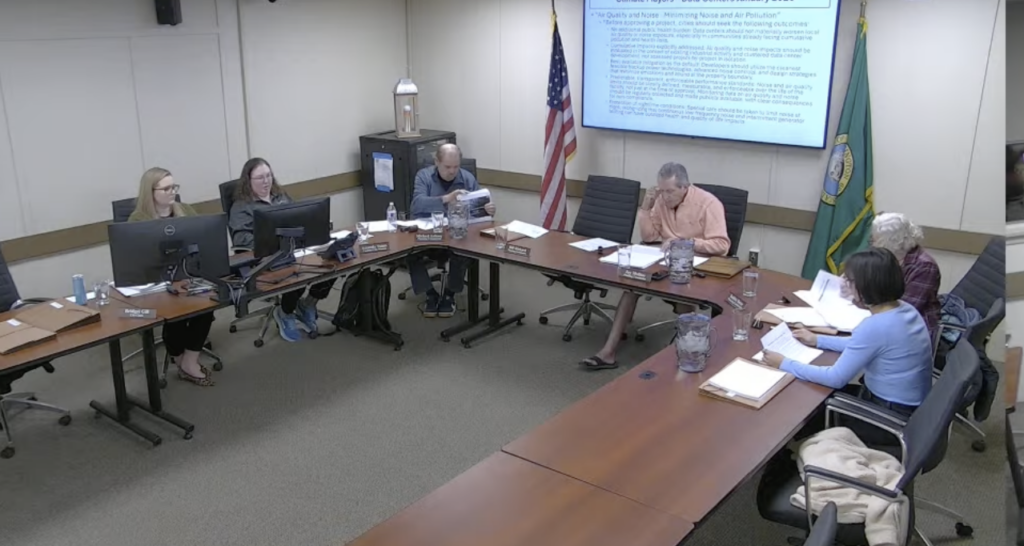
Millwood, Washington, is weighing whether to allow data centers, require special approval or prohibit them as its planning commission reviews water, power and neighborhood impacts ahead of a January moratorium deadline.
“The water usage for our area concerns me the most,” Commissioner Jay Molitor said at the commission’s Oct. 29 special meeting.
Commissioners sought more time to examine the research and hear from residents.
“So the six-month mark is January, so I’ll be talking with the city council in December about scheduling a public hearing in January to extend the moratorium,” said Amanda Tainio, Millwood’s contract city planner.
Tainio anticipated another six months to complete the work if the council extends the pause, putting the zoning decision in summer 2027. “I believe we need to be finished up by July,” she said.
Millwood adopted Ordinance 559 on July 14. A city notice describes the moratorium as covering the filing, acceptance, processing, review, denial and approval of applications to permit, site, establish or maintain data centers, along with related business licenses.
The city of Spokane adopted a one-year data center moratorium June 22. Spokane County commissioners approved a four-month pause on data center permits in unincorporated areas Aug. 18. On Oct. 20, commissioners extended the county pause through June 1, 2027, or completion of the related zoning amendments, whichever occurs first.
Milwood, a city of fewer than 2,000 residents according to census information, also maintains a median household income of about $83,000.
The commission meets next Nov. 18 at 6 p.m., when Tainio plans to present regulations adopted or proposed by neighboring jurisdictions, including Spokane and Spokane County. A packet slide lists the options: continue in January 2027; draft regulations allowing data centers, battery energy storage systems or both as a permitted use, a use subject to specific use regulations or a conditional use; or recommend that Millwood prohibit them. The December commission meeting has been canceled.
Commissioners deferred a decision on when to hold their own public hearing. Some favored January to allow more study. Molitor suggested the commission use a January meeting for further discussion, followed by an open house. Chairman Mike Ankney announced at the commission’s Sept. 30 meeting that Molitor and Commissioner Bill Rickard are stepping down from the commission.
“I’d be all in favor of even pushing it back another month because I think we’ve got so much information here, and as a planning commission, we need to talk about it a little bit more,” Molitor said.
The presentation covered facilities ranging from smaller data centers serving nearby users to large campuses supporting cloud computing and artificial intelligence. Commissioners questioned whether the largest facilities could fit within Millwood’s available land.
One commissioner identified the mill property as the only area in the city that could accommodate a data center. Another commissioner said many hyperscale facilities would not fit there and noted residential areas on all sides, along with recent rule changes allowing denser housing around it. Tainio called it one of the city’s larger parcels.
The Spokane Valley-Rathdrum Prairie Aquifer is the sole source of water for most people in Spokane County, Washington, and Kootenai County, Idaho, according to Spokane County. The U.S. Environmental Protection Agency designated it a sole source aquifer in 1978. The county describes it as highly susceptible to contamination.
Tainio said the Spokane Aquifer Joint Board was developing a letter addressing data centers over the aquifer. The board intends for municipalities to sign on to the letter. Additional feedback was expected before possible completion in December. The current draft lists minimum conditions a project should establish if a jurisdiction allows data centers over the aquifer, a shift from earlier drafts she described as critical of data centers.
“This is a draft, but it’s the most recent draft we have right now,” Taino said.
When evaporative cooling is used, up to 80 percent of the water a data center withdraws evaporates, according to research by University of Michigan assistant professor Xiaofan Liang included in the packet. Dry cooling uses air to reject heat and can reduce water consumption while increasing electricity needs. Facilities can combine the technologies, and data centers may use liquid or immersion cooling to conserve water at the server level and still use evaporative cooling to reject heat outside the building, Liang wrote.
“Technology is changing daily,” Tainio said.
Taino’s presentation focused on four stated goals for data center service from Avista, which she identified as Millwood’s gas and electric provider: maintaining reliability for existing customers, preventing existing customers from paying additional costs, supporting responsible growth and resource management, and maintaining transparency and public engagement.
“Basically, it says no single entity decides if a project would be approved,” she said. “It requires them all together.”
Avista paused processing of large data center applications requiring significant new transmission or generation in September and expects the pause to last at least 12 months, according to its website. The utility cites moratoriums in its service territory and a Washington Utilities and Transportation Commission policy proceeding, and says it intends to file a data center tariff with the commission.
The presentation also examined noise from cooling equipment and generators, generator testing, lighting, construction traffic and fuel deliveries. Material from the planning director of Mount Pleasant, Wisconsin, recommended monitoring complaints, water and sewer use, equipment changes and operations after approval, along with decommissioning and financial guarantees. It also recommended clear, predictable standards for applicants and cautioned against open-ended conditional use negotiations.
Leave a Reply