News
Dormant SoCal Nuke Plant Leaks Radioactive Material near Pacific for Second Time in Six Weeks
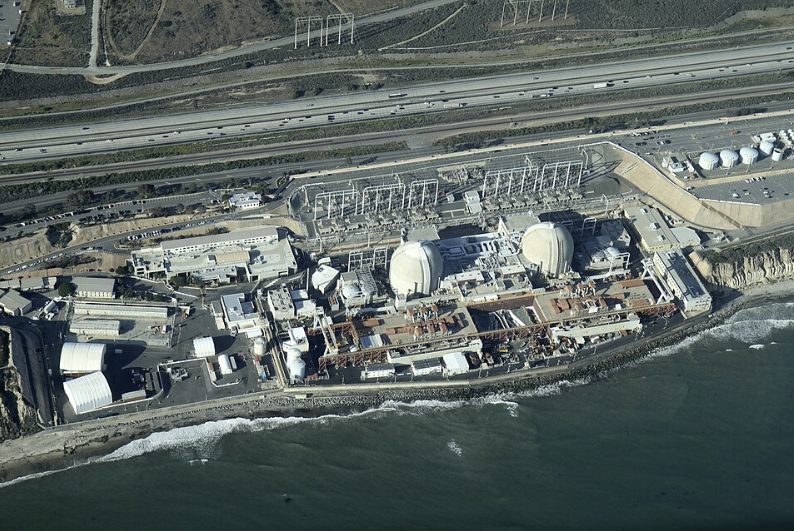
About 900 gallons of water containing radioactive tritium leaked at Southern California’s shuttered San Onofre nuclear plant after a hose coupling separated, according to a report the Nuclear Regulatory Commission published Thursday, six weeks after another accidental wastewater discharge at the site.
Southern California Edison told the NRC that workers were pumping water from the Unit 3 sump to an oil waste separator at about 10:15 a.m. on Nov. 3. A hose coupling clamp failed, separating the coupling and releasing water along the northwest side of the Material Handling Facility tent.
“Upon discovery of the leak, immediate actions were taken to stop the pumping operation,” Edison said in the notification.
This was the second leak since one in late September, when officials reported water made its way toward the Pacific Ocean. It said at the time further evaluation would take place.
The utility estimated that 900 gallons escaped in the latest discharge this week. The water that leaked contained tritium, a radioactive form of hydrogen, at less than half the level the Environmental Protection Agency allows in drinking water. The water was also more alkaline than the site’s water discharge permit allows, based on the limit Edison cited in its September report.
Edison said that, based on the information available, it believes there was no adverse impact on groundwater or ocean water quality.
The latest leak followed a Sept. 23 wastewater transfer that accidentally sent about 5,000 gallons into the Unit 2 storm drain and intake pathway, which leads to the Pacific Ocean.
In the September incident, a planned transfer continued beyond its intended period between about 8 p.m. and 10 p.m. PDT. The water entered the storm drain and intake route instead of completing the intended controlled wastewater discharge path.
That water consisted mostly of groundwater, with some concrete cutting water, according to the earlier NRC notification. Samples collected at three locations showed tritium at about 3,000 picocuries per liter and a pH of 10.6.
The September report specifically said the pH exceeded the permit limit of 9. Total suspended solids measured 16 milligrams per liter, and oil and grease laboratory results were pending. Edison said the remaining sample values were within limits and, based on preliminary results, it did not believe the release threatened ocean water quality.
San Onofre notified the San Diego Regional Water Quality Control Board about the latest unplanned discharge a day after it happened, and the NRC earlier today.
Both NRC notifications were classified as “non-emergency” events and cited the reporting requirement associated with notifying an outside government agency. The November account also said the report was part of a voluntary communication protocol under the nuclear industry’s groundwater protection initiative.
The Environmental Protection Agency’s drinking-water standard for beta and photon radioactivity is 4 millirem per year. For tritium alone, the concentration assumed to produce that dose is 20,000 picocuries per liter. Both reported concentrations were below that level.
Edison says San Onofre stores spent fuel in 123 canisters: 73 in underground system run by nuclear company Holtec, and 50 in Transnuclear’s horizontal storage system. The NRC identifies the independent spent fuel storage installation under docket 72-41.
San Onofre’s Units 2 and 3 stopped generating electricity in January 2012, according to the NRC. Edison formally notified the agency of permanent cessation in June 2013. Edison’s decommissioning program involves dismantling the plant and removing radioactive components and materials, with the eventual goal of returning the site to its owner, the U.S. Navy.
Edison says planned liquid batch releases involve placing water in a tank, circulating it through filters and ion exchangers, and sampling it before discharge to ensure compliance with regulatory requirements.
For those planned operational releases, Edison says it provides approximately 48 hours’ public notice, including the expected volume, duration, contents and start date. The discharge system uses the Unit 2 conduit, which extends more than 8,000 feet offshore; its diffuser section begins about 1.1 miles from shore.
Edison says liquid releases will continue throughout dismantlement and vary with decommissioning activity.
Leave a Reply